
Micro SaaS Ideas: 11 Best Solo Projects (Ultimate Guide)
Introduction
Micro-SaaS ideas are small, focused software products built to solve one specific problem for a narrow audience. Unlike traditional SaaS companies that chase millions of users and massive valuations, micro-SaaS targets dozens or hundreds of paying customers who need exactly what you built. The entire business can run on a laptop. No team, no office, no pitch deck.
The appeal is simple: you can vibe-code a working prototype in a weekend, validate it with real users in a month, and reach profitability with a few hundred subscribers. I've watched non-technical founders ship their first paid product in under thirty days using AI tools and vibe coding workflows. The barrier isn't technical skill anymore—it's picking a problem narrow enough to solve completely.
This guide walks through how to identify, build, and launch micro-SaaS ideas you can execute solo. You'll see what works, what doesn't, and how to avoid the traps that kill most side projects before they ship. No fluff, no theory—just the operator's playbook for going from idea to first dollar.
Explore micro SaaS ideas that can be built solo. This guide offers actionable insights for aspiring founders.
Understanding Micro-SaaS
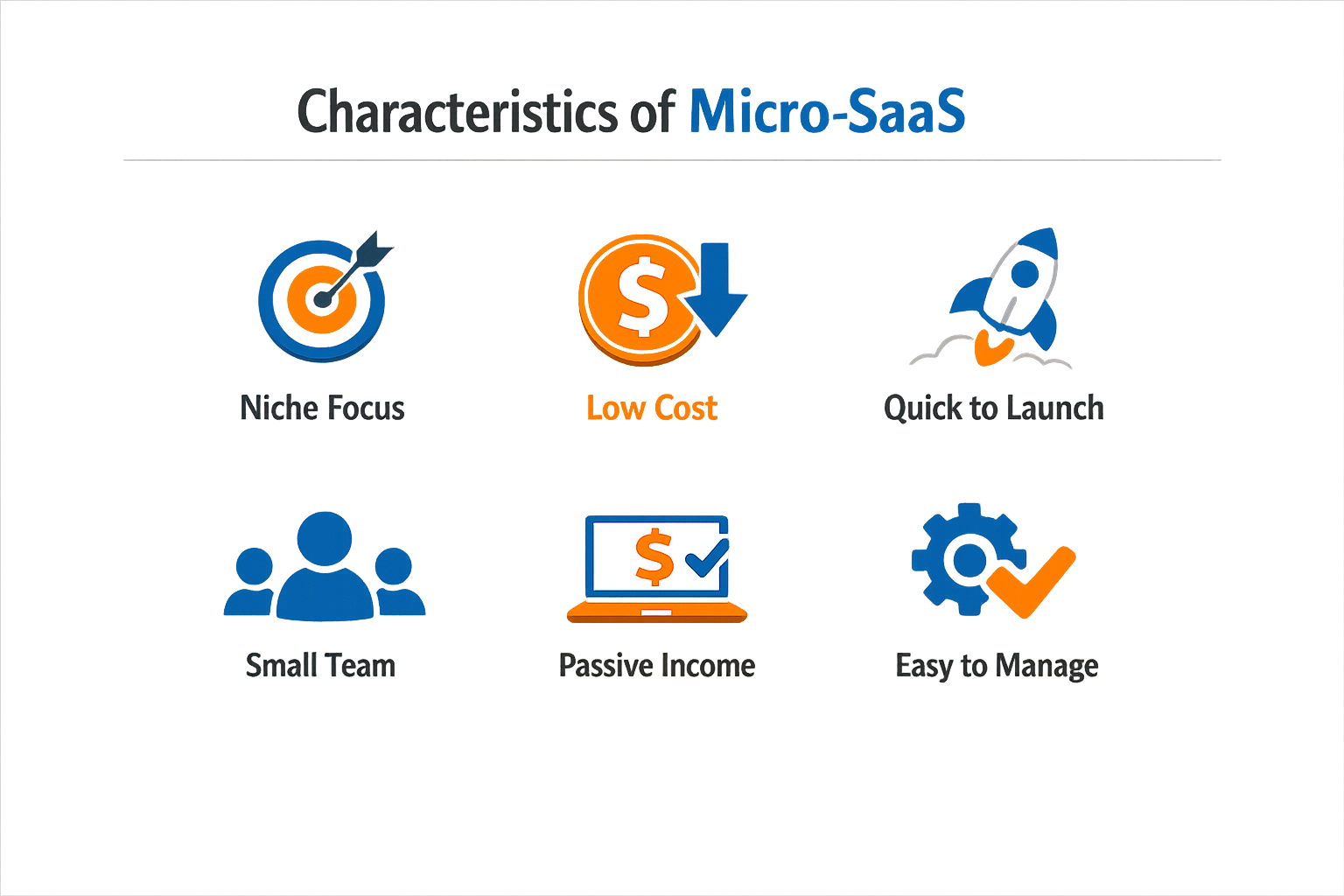
Micro-SaaS is a scaled-down version of Software as a Service that solves one problem for a niche market with minimal resources. You target a narrow audience, build a focused solution, and run it without a team. The model strips away everything that doesn't directly serve that single pain point.
The defining trait is constraint. You pick a problem small enough that one person can support the product, reach the buyers, and maintain the codebase. This isn't about building less capable software — it's about choosing a scope you can execute alone.
What Makes Micro-SaaS Different
Traditional SaaS companies raise capital, hire teams, and chase broad markets. Micro-SaaS reverses every assumption. You bootstrap, stay solo or near-solo, and serve a market segment large platforms ignore. The revenue ceiling is lower, but so is the operational overhead.
You own the entire stack. Customer support, feature roadmap, billing, deployment — all decisions route through you. That sounds like a burden until you realize it also means zero coordination tax and no feature bloat from competing internal stakeholders.
Choosing Problems That Fit the Model
Not every SaaS idea works at micro scale. Filter for three traits: the problem costs the buyer money or time, the buyer is reachable through channels you already understand, and the product is supportable without a team. If any of those fail, the idea probably requires resources you don't have.
The best micro-SaaS ideas emerge from repetitive workflows in industries you've worked in. You've seen the spreadsheet someone updates every Monday, the manual export-import dance between two tools, the compliance checkbox nobody automates because the market is too small. Those gaps are your territory.
If you're mapping out your first build, vibe coding for beginners walks through the weekend-prototype approach that lets you test these ideas without committing to a full build cycle.
Benefits of Micro-SaaS Ideas
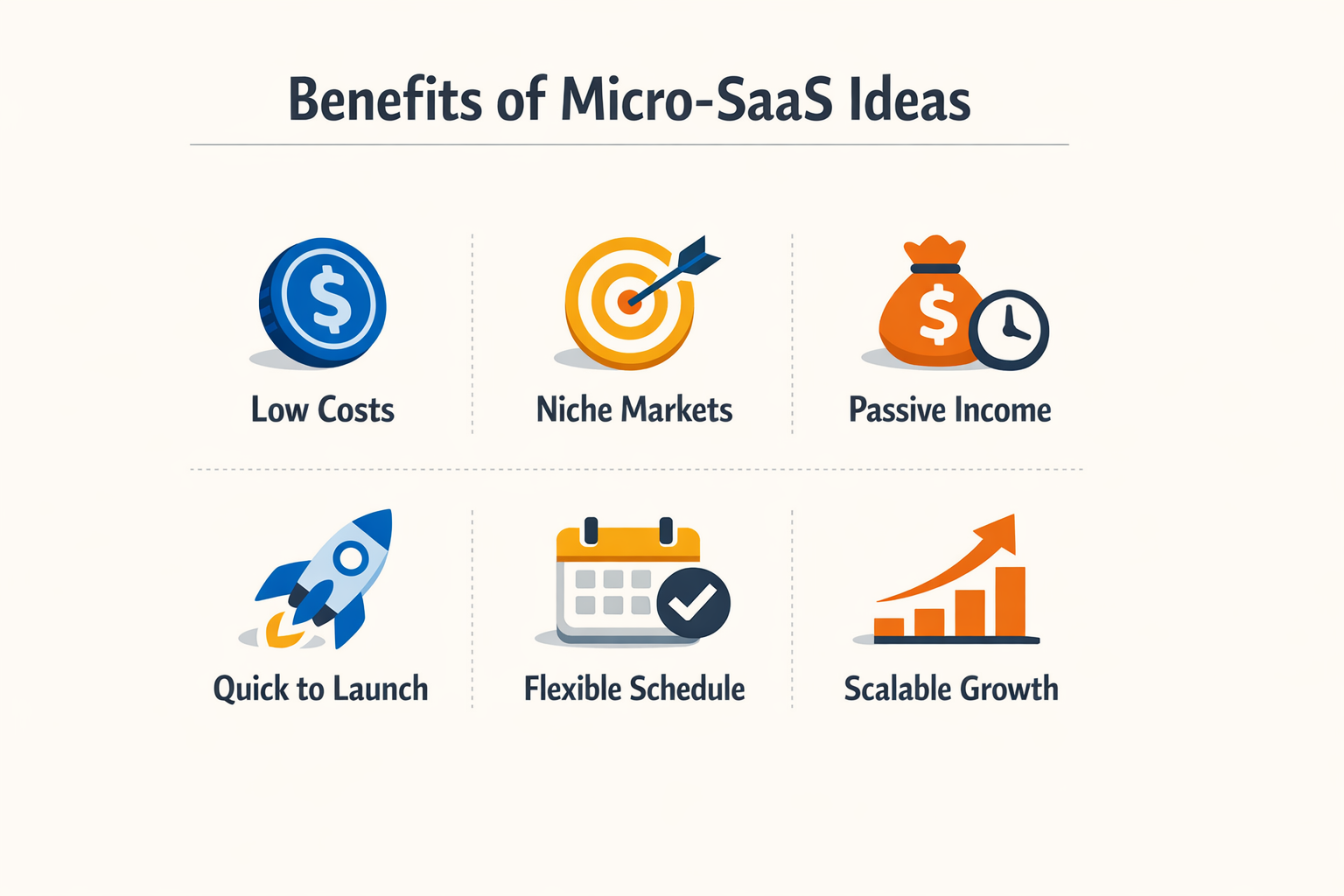
Micro-SaaS offers a practical path for solo developers who want to build profitable software without venture capital or a team. The model strips away complexity and focuses on narrow problems that one person can solve and support.
Financial Advantages
The economics favor solo builders. Developer tools, a common micro-SaaS category, run at 80-90% gross margins with extremely low churn when they integrate into daily workflows. You keep most of what you earn, and customers stick around because switching costs are real.
The developer tools market alone is projected to reach $52 billion by 2028. That's enough room for thousands of focused products serving specific niches. You don't need a large slice to build a sustainable business.
Operational Simplicity
A good micro-SaaS is one person can support. That means simple billing, low support load, and a clear buyer. You're not managing a support team or juggling complex infrastructure. You're shipping features and answering emails.
This constraint forces clarity. If you can't explain the value in 30 seconds, you probably can't support it solo either. The discipline of building small keeps you focused on problems that actually matter to a specific group of people.
Speed to Market
Smaller scope means faster launches. You can go from idea to paying customer in weeks instead of years. Each iteration teaches you something concrete about the market, and you adjust without coordinating across a team or rewriting a roadmap.
For founders exploring vibe coding for beginners, micro-SaaS is the natural first project. The feedback loop is tight, the stakes are manageable, and the learning is immediate.
Popular Micro-SaaS Ideas
Micro SaaS works best when you solve a narrow problem for people who already have money. The successful ones share a pattern: they replace something annoying with something that just works.
Booking and Scheduling Tools
A booking tool for mobile repair services or independent therapists replaces phone tag and shared calendar chaos. The value is immediate. Someone running a service business will pay $20–50/month to stop managing appointments manually.
The technical lift is manageable. Calendar sync, SMS reminders, payment collection. Nothing exotic. You can ship a working version in weeks, not months.
Developer Education Platforms
A flashcard SaaS for developers using spaced repetition hits a real need. Coding interview prep, system design patterns, language syntax — developers already study this way, they just use scattered tools.
The market is proven. Developers pay for learning tools when the content is focused and the UX doesn't fight them. Start with one language or one interview domain. Expand only after the core loop works.
Analytics and Privacy-Focused Tools
Plausible Analytics runs at over $100K monthly recurring revenue with three people. They built a simpler, privacy-compliant alternative to Google Analytics. The founder was technical. The product was narrow.
Privacy-focused tools have tailwinds. GDPR and user suspicion of tracking create demand. But the bar is high — your alternative has to be genuinely easier, not just more ethical.
Workflow Automation for Niche Verticals
General automation platforms like Zapier serve everyone. Micro SaaS wins by serving one vertical deeply. A tool that automates intake forms for physical therapists or invoicing for freelance translators can charge more because it speaks the user's language.
The trick is domain knowledge. You need to understand the workflow well enough to pre-build the automations they actually want. If you're guessing, pick a different idea.
The cheapest validation is watching someone try to solve the problem without your tool — if they give up or pay for something worse, you have a wedge.
Spreadsheet Replacement Tools
If a business runs on a spreadsheet with macros and conditional formatting, that's a micro SaaS waiting to happen. Turn spreadsheet into app projects convert well because the user already proved they'll organize their work this way.
The migration path is clear. Export their CSV, import into your schema, add the features the spreadsheet couldn't handle. Charge monthly because they're not going back to Excel.
How to Brainstorm Micro-SaaS Ideas
Most founders skip the validation step and build something nobody wants. The fix is simple: talk before you type.
Run the Checklist Before You Code
Before you write a single line, answer four questions. Who is the user? Who pays? What happens if they do nothing? How often does the problem show up?
Step 1
Identify user and payer
Write down the person who experiences the pain and the person who signs the check. If they're different, your pitch needs two versions. If you can't name both, the idea isn't ready.
Step 2
Assess inaction consequences
What breaks if the user ignores the problem for a month? If the answer is "nothing," you're selling a nice-to-have. Nice-to-haves don't convert.
Step 3
Determine problem frequency
Daily problems justify monthly subscriptions. Quarterly problems don't. Count the intervals; they set your pricing ceiling.
Step 4
Map current solutions
List what people use today—spreadsheets, manual processes, duct-taped workflows. Your product replaces one of those, so you need to know which one and why yours is faster.
Validate With Ten Conversations
Talk to ten potential customers before you build anything. Ask what they use now, what it costs them in time or money, and whether they'd pay for a fix. If seven out of ten say no, the idea needs work.
Test Interest With a Landing Page
Build a one-page site with a headline, three bullets, and an email signup. Drive a hundred visitors from a relevant forum or ad spend. If fewer than five people sign up, the positioning is broken or the problem isn't urgent.
The landing page isn't marketing—it's a hypothesis test. You're checking whether strangers care enough to leave contact information. If they don't, rewrite the headline or pick a different problem.
Align Ideas to Your Stack
Pick problems you can solve with tools you already know. If you're comfortable with vibe coding workflows, choose ideas that fit no-code or low-code patterns. If you write backend services, choose API-first products. Mismatched skills and ideas burn months.
The best micro-SaaS idea is the one you can ship in four weeks with the tools you used last month.
Building Your Micro-SaaS
The path from idea to launch is simpler than most founders assume. You need a working product, a way to charge for it, and a support plan you can execute alone. Everything else is optional.
Design for One-Person Support
A solo builder should aim for a product that one person can support. That means simple billing, low support load, and a clear buyer. If your product requires daily hand-holding or complex integrations, you will not survive launch week.
Keep the feature set small. Ship the minimum version that solves the problem, then add features only when users ask twice. Most failed micro-SaaS products die from feature bloat, not feature scarcity.
Choose Your Build Approach
You have two paths: code it yourself or use no-code tools. If you know how to code, write it. If you do not, learn enough to vibe-code a prototype or use a no-code platform that exports real code.
For founders who want to build apps with AI and vibe coding, the workflow is straightforward: describe what you want, iterate on the output, and ship when it works. The tool does not matter as much as your ability to describe the problem clearly.
Step 1
Build the core loop first
Start with the single action your user will repeat most often. If your product is a form builder, build one form that saves and displays results. Everything else—billing, accounts, export—comes after the core loop works.
Step 2
Add authentication and billing
Once the core loop works, add user accounts and a way to charge. Use Stripe for payments and a hosted auth service like Clerk or Auth0. Do not build your own authentication.
Step 3
Test with real users before launch
Find five people who match your target buyer and ask them to use the product for one week. Watch where they get stuck. Fix those points, then launch.
Distribution Before Marketing
Using GitHub for open-source distribution can help build trust before charging for premium features. If your product has a free tier or a component you can open-source, publish it early. Developers trust code they can read.
Your first ten customers will come from places you already participate: a Slack group, a subreddit, a Discord server. Do not buy ads until you have proven that strangers will pay you without a personal introduction.
Marketing Your Micro-SaaS
Most solo founders spend six months building and six days thinking about distribution. That ratio kills products. Marketing starts before the first commit—when you choose a problem narrow enough that you know exactly where the ten people with that problem hang out online.
Pick One Channel and Exhaust It
You cannot run ads, write content, post on Twitter, and cold-email simultaneously as a solo operator. Pick the channel where your specific users already gather. If you built a Notion extension for academic researchers, you go to r/GradSchool and the Notion subreddit. If you built a Stripe reconciliation tool for e-commerce ops teams, you join Shopify Facebook groups and comment on every "my books are a mess" thread for three months.
Exhaustion means you become the name people tag when someone asks the question your product answers. You are not famous; you are present.
Content That Solves the Problem for Free
Write the guide that solves 80% of your user's problem without your product. If you built a tool that auto-generates SQL from natural language for analysts, write "How to Write Common SQL Queries: A Reference for Non-Engineers." Give away the manual solution. The person who needs the manual solution five times a week will pay you to automate it.
Short posts work better than long ones. Two hundred words with a code snippet beats two thousand words of philosophy. Publish where your users already read—DEV.to for developers, Medium publications for specific verticals, your own blog only if you already have traffic.
Build in Public with Specifics
"Building in public" means sharing the number, not the feeling. Tweet your MRR, your churn rate, the feature you just killed because nobody used it. The transparency builds trust and attracts other founders who become your first evangelists. Avoid vague inspiration—"Shipped a big feature today!" does nothing. "Added CSV export because three users asked; took four hours, two of them fighting pandas" is a story.
For a deeper look at turning an early idea into something you can actually build and market, see I Have an App Idea: The Ultimate Simple Guide for Founders.
Leverage Your Existing Network First
Your first five paying customers are people you already know or people one hop away. Send a direct message to everyone in your contact list who fits the user profile: "I built this thing for [problem]. If you have ten minutes I will watch you use it and fix anything broken." Half will ignore you. Three will try it. One will pay.
Do not ask for feedback; ask them to use it while you watch. Feedback is abstract. Usage is purchase intent.
Common Challenges in Micro-SaaS

Building solo means you wear every hat. That sounds romantic until you hit the first wall — usually around month two when the code works but nobody knows it exists.
The challenges cluster into three zones: technical debt you can't pay down, marketing you don't have time for, and support that eats your build hours. Each one compounds the others.
Technical Limitations Hit Fast
You ship the MVP with duct tape and prayer. It works for ten users. At fifty users, the database locks start. At a hundred, the background jobs pile up and timeout.
Scaling isn't the problem — knowing when to stop feature work and fix infrastructure is. Solo founders typically wait too long because new features feel like progress and refactoring feels like going backward.
If you're learning vibe coding to build your product, you hit this wall harder. AI-generated code optimizes for "it runs" not "it scales." The technical debt arrives pre-loaded.
Marketing Competes With Building
You have eight hours. Four go to support and bug fixes. Two go to the feature customers asked for. That leaves two for marketing — except marketing needs consistency, and two fragmented hours don't produce consistent anything.
Most solo founders solve this by not marketing at all. They tell themselves the product will speak for itself. It won't.
The alternative — hiring help — introduces coordination overhead that often costs more time than it saves. You end up writing briefs, reviewing drafts, and explaining context instead of building.
Support Scales Linearly With Users
Each new customer brings questions. Some are onboarding friction you can fix. Most are feature requests you can't prioritize. A few are bugs that only happen in their specific environment.
You can't ignore support — churn kills micro-SaaS faster than any competitor. But you also can't let it consume your build time. The balance is manual and exhausting.
The hidden cost of solo SaaS is that every operational task — billing, support, compliance — takes time from the only thing that actually grows the business: shipping features that matter.
Burnout Arrives Without Warning
You're moving fast, shipping weekly, handling support in the evenings. Revenue is growing. Everything feels sustainable.
Then one morning you open the laptop and realize you haven't taken a full day off in four months. The backlog has two hundred items. Every Slack notification feels like an obligation.
Burnout in solo SaaS doesn't announce itself. It accumulates in tiny doses — the support ticket you answer at 11 PM, the feature you ship on Sunday because you promised it Monday, the vacation you skip because the server might go down.
The fix isn't working less — it's building systems that let you step away. Automated onboarding, self-service docs, clear support boundaries. Most solo founders learn this after burning out, not before.
Pricing Mistakes Compound
You launch at $29/month because it feels accessible. Six months later you realize your support costs $40 per customer and your infrastructure scales linearly with usage.
Repricing existing customers is painful. Grandfathering them in means your unit economics stay broken. Forcing an increase means churn spikes and reviews turn sour.
Pricing is easier to get right at launch than to fix later. Underpricing is the most common mistake solo founders make — and the hardest to recover from without killing momentum.
Who Should Choose Micro-SaaS Ideas
Micro-SaaS works best for builders who already know what bad software feels like in a specific domain. If you've spent years wrestling with clunky tools in a niche vertical, you have the pattern recognition to spot a real problem. The ideal candidate isn't someone chasing trends—it's someone who can describe the exact moment a workflow breaks and why the current solution misses the mark.
Skills That Matter More Than You Think
You don't need a CS degree, but you do need comfort with iteration. Micro-SaaS founders ship incomplete products, gather feedback, and rebuild sections without ego. Technical fluency helps—enough to evaluate an AI-generated PR or debug a broken API call—but operational discipline matters more. If you can write a clear PRD and hold yourself to a shipping cadence, you're already ahead of most aspirants.
Financial expectations shape fit as much as skills. Micro-SaaS rarely scales to venture outcomes—most top out at $10K–$50K MRR. If that runway funds your next project or replaces a salary, it's a win. If you need eight-figure exits, build something else. The model rewards people who value autonomy and tight feedback loops over explosive growth.
When Micro-SaaS Is the Wrong Bet
Skip micro-SaaS if you hate talking to customers. You'll spend more time on support and sales than code, especially in the first year. If you want to disappear into a basement and emerge with a finished product, this path will frustrate you. The same applies if you need a team to stay motivated—solo work requires self-direction and comfort with long stretches of uncertainty.
Also avoid it if your idea requires network effects or two-sided marketplaces. Micro-SaaS thrives on simple, single-player workflows. The moment you need critical mass to deliver value, you've left micro-SaaS territory and entered a different game with different capital requirements.
Micro-SaaS selects for people who would rather own a small, profitable thing than rent a chair at someone else's rocket ship.
Conclusion
Micro SaaS ideas offer solo founders a realistic path from concept to revenue without venture capital or large teams. The pattern is consistent: find a narrow problem, build the smallest solution that works, ship it, and iterate based on real usage. Most successful micro SaaS products solve one workflow pain for a specific audience—email parsing for accountants, invoice reminders for freelancers, API monitoring for DevOps teams.
The technical barrier is lower than it was five years ago. Modern tools let you prototype in days and validate demand before writing production code. The economic model is equally straightforward: keep costs near zero, charge enough to make the work sustainable, and grow through word-of-mouth in tight communities. You don't need a million users when a few hundred paying customers generate meaningful income.
Start with the problems you already see. If you've worked in an industry, you know the repetitive tasks people hate. If you use software daily, you know the gaps between tools. The best micro SaaS ideas come from personal frustration, not market research. Build something you would pay for, then find others who share the same pain.
The failure mode is usually over-building, not under-building. Launch with fewer features than you think you need. Let early users tell you what's missing. Most features you plan in week one will never matter; the ones that do will become obvious after ten customer conversations.
If you're deciding whether to start, the answer is simple: pick one idea, build a landing page this week, and see if anyone signs up for a waitlist. That signal—real people giving you their email—tells you more than any business plan. From there, it's just execution: build the core feature, charge for it, and improve it every week.
For founders ready to move from idea to implementation, I Have an App Idea: The Ultimate Simple Guide for Founders walks through the next steps—from validating demand to shipping your first version without wasting months on features no one needs.
Related reading
Failed App Ideas: 12 Surprising Mistakes and Ultimate Lessons