
How to Build Engineering Capabilities for Your Software Project
Top takeaways
- Building engineering capabilities means assembling the right mix of skills, tools, and processes to ship software that works
- Strong capabilities reduce your dependency on any single vendor or contractor and give you negotiating leverage
- Most solo founders overestimate what they can vibe-code and underestimate the cost of production-grade infrastructure
- A clear [development plan](/blog/dev-plan-guide-non-technical-founders) prevents scope creep and keeps your runway intact
- The goal is not to become an engineer — it's to know enough to evaluate work, spot risk, and make informed build-vs-buy decisions
Introduction
I've watched dozens of non-technical founders burn through their seed round because they treated engineering as a black box. They hired the first dev who quoted a number, then discovered six months later that the codebase was unmaintainable and the contractor had vanished. Building engineering capabilities is not about writing code yourself. It's about knowing what questions to ask, which tools actually matter, and how to structure a project so you can change vendors without starting over.
This guide walks through what engineering capabilities are, why they matter for your project's survival, and how to build them without a CS degree. You'll learn how to evaluate engineering services, avoid the common mistakes that kill momentum, and set up a foundation that scales from prototype to production. If you're a solo founder or a small team without a technical co-founder, this is the playbook you need before you write the first check to a dev shop.
Learn how to enhance your software project with effective engineering services to boost capabilities.
What is Engineering Services?
Engineering services are the technical functions that turn an idea into working software. They include everything from writing code and setting up infrastructure to debugging, deploying, and maintaining an application. For a software project, engineering services are the labor that produces the artifact — the running product users interact with.
Core Components
Engineering services break down into three layers. First, development: writing the code that implements features, whether frontend UI, backend logic, or data handling. Second, tooling and environment: managing the stack, dependencies, build systems, and deployment pipelines that let code run reliably. Third, operations: monitoring, fixing errors, scaling infrastructure, and keeping the system available.
Modern platforms bundle these layers. Tools like V0 and Bolt provide intelligent agents that handle development, environment setup, and deployment in one interface. V0 offers autonomous capabilities including web search, site inspection, error fixing, and external tool integration. Bolt runs entirely in the browser and sets up your development environment for you, so there's no local setup to manage.
Who Provides Engineering Services
Engineering services come from three sources. In-house teams: employees who know your product and maintain institutional knowledge. Contractors and agencies: specialists hired for a project or a phase. AI-assisted platforms: tools that generate code, provision infrastructure, and automate debugging, reducing the need for manual engineering hours.
Each source has trade-offs. In-house teams cost more but stay with the product long-term. Contractors deliver speed but leave when the contract ends. AI platforms like Bolt let entrepreneurs build a complete business, from a company website to a full product, without hiring a dev team. For a dev plan guide for non-technical founders, these platforms compress the engineering services layer into a single subscription.
Engineering Services vs. Engineering Capabilities
Engineering services are the work; engineering capabilities are the capacity to do that work reliably and at scale. Services are transactional — you hire someone or buy a tool to ship a feature. Capabilities are structural — you build systems, processes, and knowledge that let you ship features repeatedly without starting from scratch each time. This article focuses on building the capability, not just buying the service.
Why Engineering Services Matter
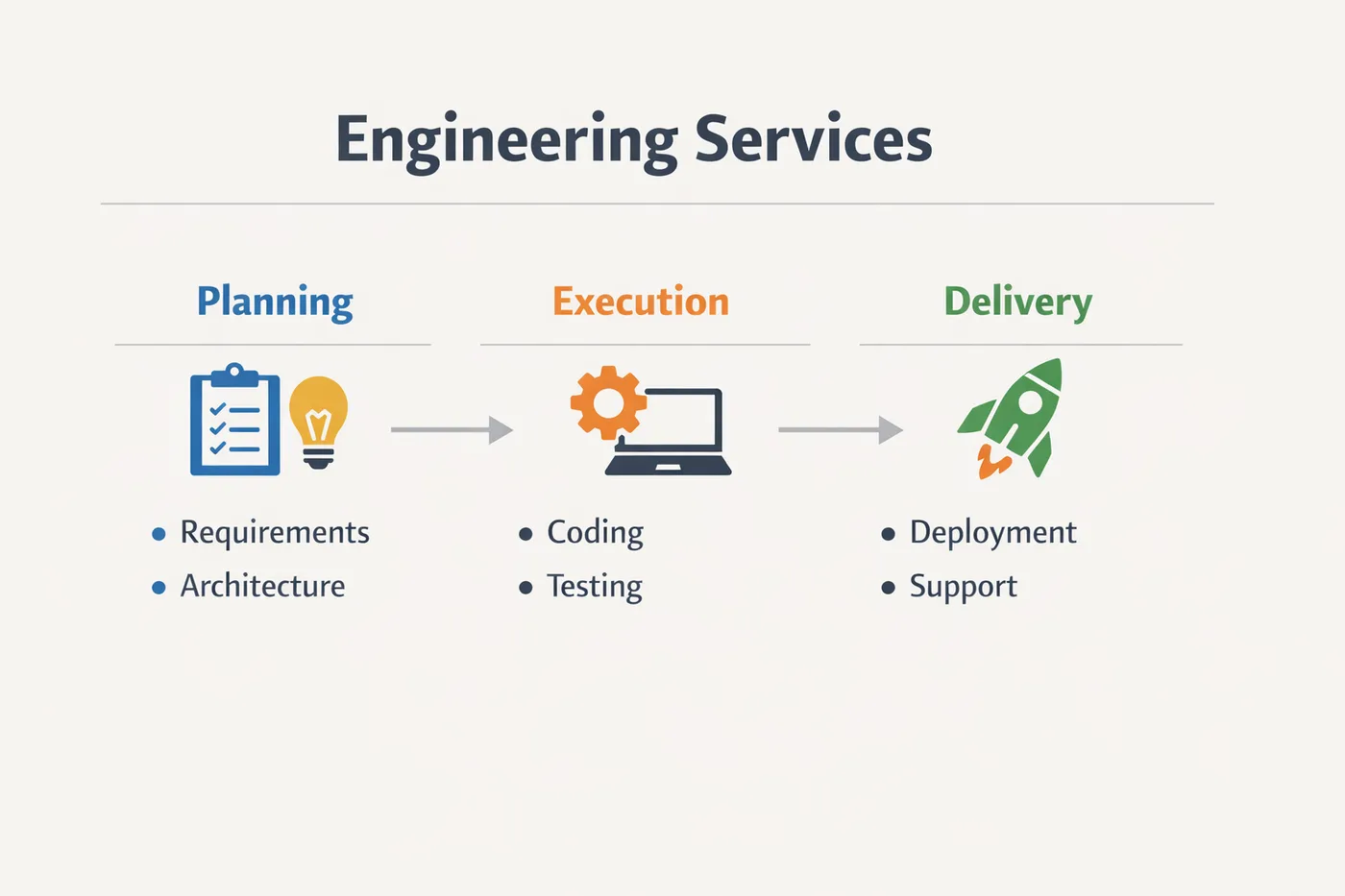
Engineering services determine whether your software project ships or stalls. They bridge the gap between what you want and what actually runs in production. Without them, you're guessing at architecture, troubleshooting in circles, and rebuilding features that should have worked the first time.
The right engineering capability accelerates execution. Product managers turn insights into working prototypes faster, test assumptions with real users, and iterate based on feedback instead of speculation. Entrepreneurs build complete products without hiring full engineering teams. Marketers ship campaign pages with integrated hosting and SEO instead of waiting on dev cycles.
Speed and Flexibility Without Compromise
Modern engineering services let you choose how hands-on you want to be. Describe what you need and the service builds it, or write code directly when you need full control. This flexibility matters when requirements change mid-project or when you discover edge cases in production.
Bolt exemplifies this model: you can prompt for features when speed matters and drop into code view when precision matters. The environment adapts to your workflow instead of forcing you into one lane. Students turn class projects into deployed apps. Agencies deliver more client work without expanding headcount.
Integrated services eliminate the friction of coordinating multiple vendors. When your database, hosting, and domain management live in one system, you spend less time on DevOps and more time on product decisions. This consolidation reduces points of failure and simplifies troubleshooting when something breaks.
Ownership and Portability
You own the code you create. This isn't a minor detail—it's the foundation of long-term viability. Services that lock you into proprietary formats or restrict commercial use create risk. When you control your codebase, you can migrate to different infrastructure, hire a team to extend it, or sell the entire project without legal entanglements.
Browser-based environments remove installation barriers. No local setup means you start building immediately, whether you're on a laptop, a tablet, or a borrowed machine. The development environment provisions itself, and you focus on the work instead of dependency management.
For a deeper look at translating project vision into executable plans, see App Development Plan: Dev Plan Guide for Non-Technical Founders (2025).
How to Build Engineering Capabilities
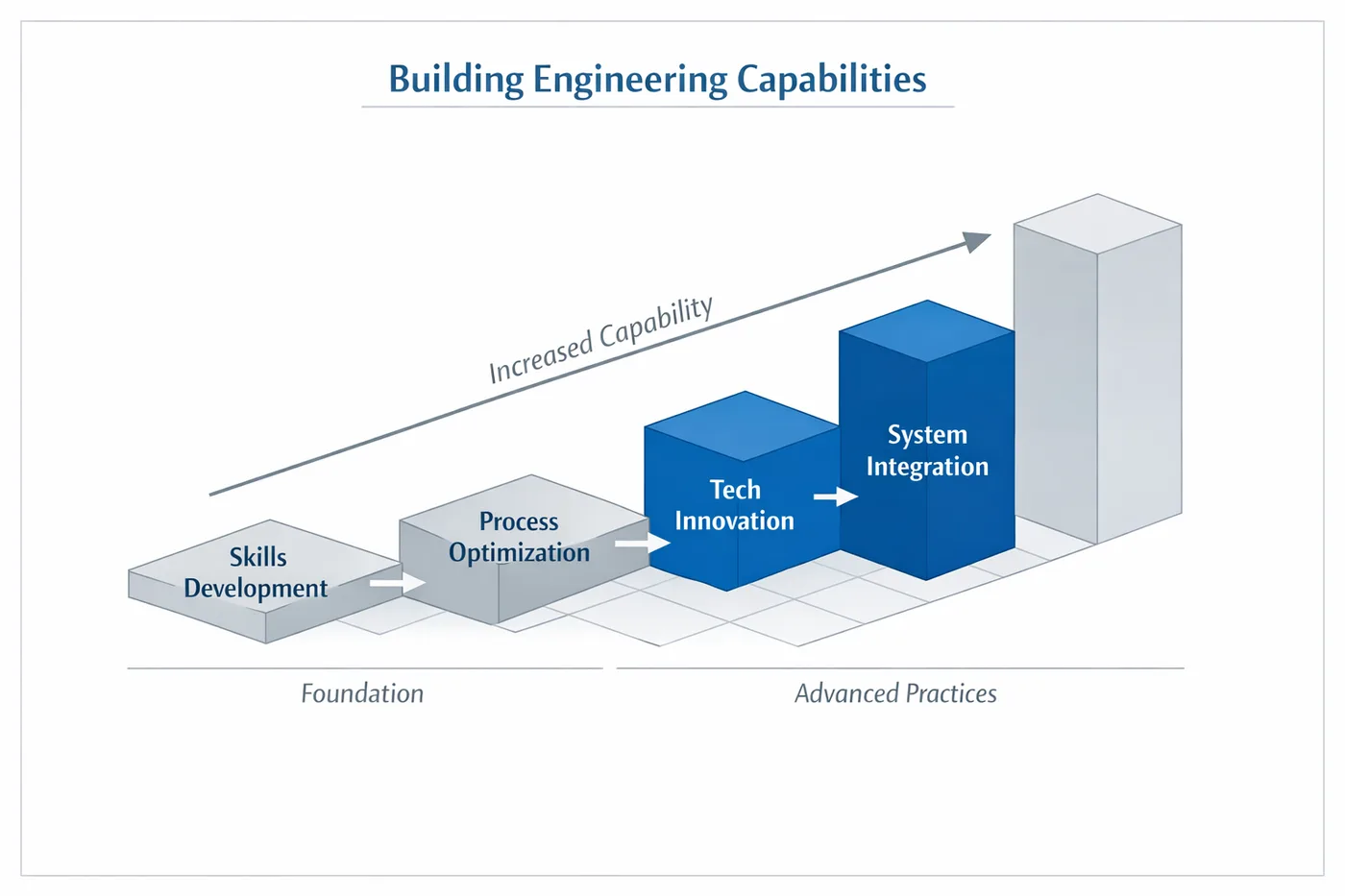
Building engineering capabilities for a software project isn't about assembling a team and hoping for the best. It's a deliberate process of defining what you need, choosing the right approach, and iterating until the system works. Solo founders can ship production apps with AI tools in weeks, while well-funded teams may stall for months because they skip planning. The difference is method.
Start with a Plan Before Writing Code
Don't touch code until you know what you're building. Use a planning mode to map out the project structure, identify dependencies, and clarify requirements. For larger changes, spend extra time creating a precise, well-scoped plan — the hard part is often figuring out what change should be made, not implementing it.
Write down what the system needs to do in plain language. List features, data flows, and integration points. If requirements are unclear, explore and understand the scope before making architectural decisions. A fuzzy brief produces fuzzy results.
Decide whether you're hiring developers, using AI coding tools, or contracting an agency. Each path has different capability requirements. AI tools like Cursor Agent require you to write clear instructions and review output critically. Traditional development requires you to evaluate technical skills and manage communication. Pick the path that matches your ability to supervise the work.
Break the project into chunks you can test independently. For quick changes or tasks you've done before, jump straight to implementation. For anything novel or complex, validate the approach first with a prototype or proof-of-concept. If something doesn't match what you wanted, revert the changes, refine the plan to be more specific, and run it again — this is often faster than fixing an in-progress build.
Develop Internal Review Capabilities
You need the ability to evaluate whether what got built matches what you asked for. This doesn't require deep technical knowledge, but it does require structured thinking. Create a product spec or PRD that defines success criteria before development starts. Then test against those criteria.
For AI-assisted builds, the pattern is: plan, delegate to the tool, review output, refine instructions. The tool won't guess what you meant. If the result is wrong, the plan was probably ambiguous.
Best Practices for Engineering Services
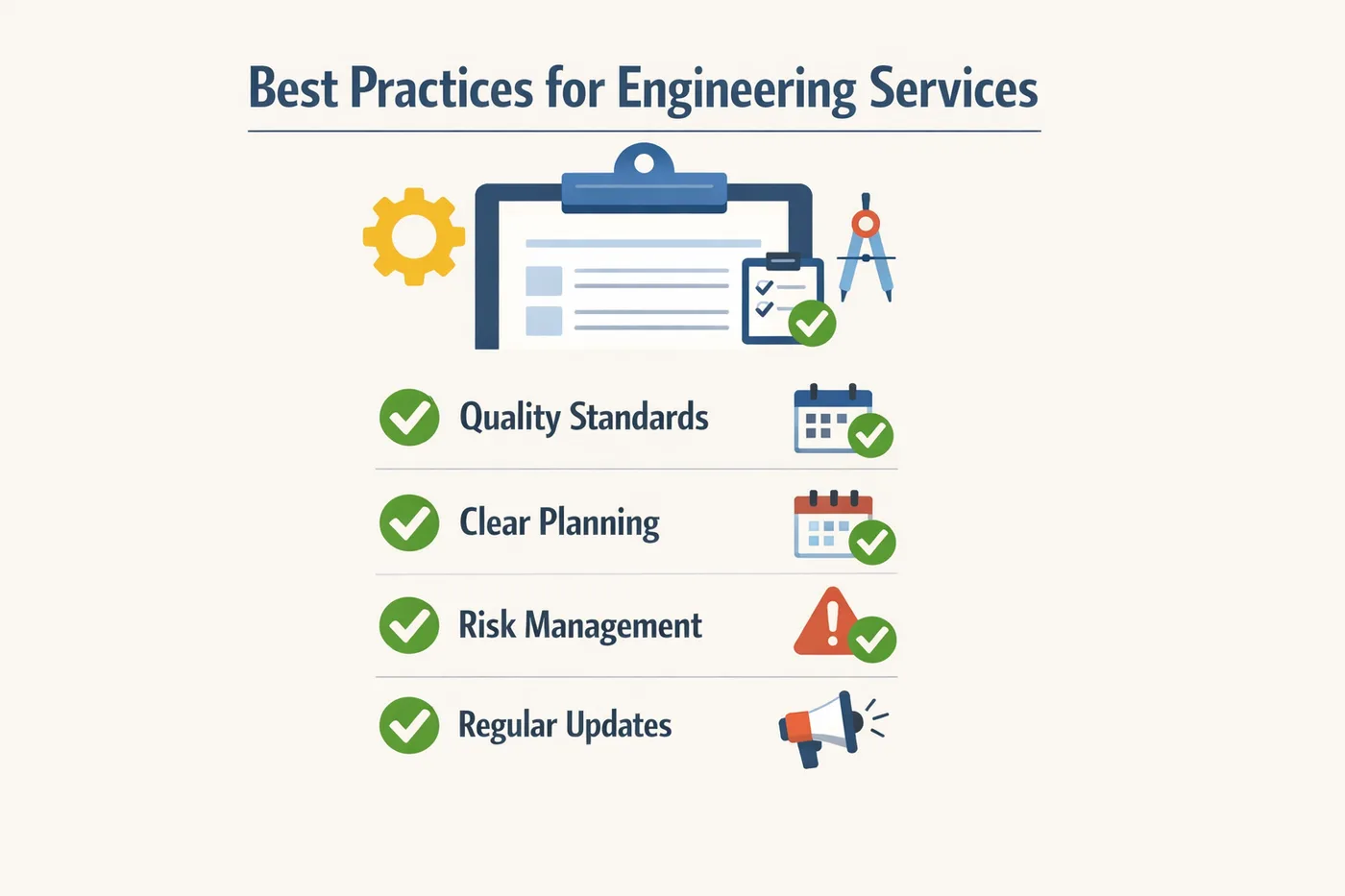
Building engineering capabilities means choosing practices that hold up under pressure. Features that look clean in the editor can break in staging if you skip the boring parts. These practices are the boring parts that matter.
Maintain Consistent Quality Standards
Your merge bar stays the same whether you wrote the code or an AI did. AI-generated code can follow patterns, compile, and pass tests while still missing edge cases or duplicating logic that already exists somewhere in your codebase. The code review step catches those gaps before they reach production.
Review your own code before you ask anyone else to look at it. If the change is too large to review comfortably, break it into smaller pieces that are easier to review for both you and your agents.
Build Real-Time Feedback Loops
Real-time preview of your app with visual progress indicators and rich UI feedback for all actions shortens the gap between writing code and seeing what broke. The faster you see a problem, the cheaper it is to fix. Waiting until QA or production to discover a broken integration costs days instead of minutes.
Set up your environment so you can see the impact of a change immediately. If you're working on a product spec that includes complex user flows, real-time feedback helps you verify each step without waiting for a full build cycle.
Monitor Security After You Ship
Security doesn't stop when you publish. Continue monitoring security after publishing as your project changes — dependencies update, new vulnerabilities are disclosed, and attack surfaces shift. Schedule recurring security scans if your plan supports them. Review dependency vulnerabilities by project or by vulnerability so you can prioritize fixes based on actual risk.
Customize Agents to Your Codebase
Generic prompts produce generic code. Customizing coding agents to work with your specific codebase makes your workflow faster and reduces the time you spend fixing patterns that don't match your architecture. Teach the agent your naming conventions, your error handling patterns, and the structure of your test suite. The upfront work pays off when the agent stops generating code you have to rewrite.
Common Mistakes in Engineering Services
Building engineering capabilities fails predictably. Most founders repeat the same errors: they move fast without review, they trust code that looks correct, they skip the work that catches problems before production.
Merging AI-Generated Code Without Review
AI tools write code quickly. That speed creates tech debt if you don't review what gets merged. The same standard applies whether a human or an agent wrote the code — if you wouldn't merge it from a junior developer without review, don't merge it from an AI.
Code review catches these problems. You review your own code first, then ask others to look. If the change is too large to review comfortably, break it into smaller pieces. Smaller changes are easier to review for both humans and agents.
Skipping the Understanding Step
You need to understand the code changes before they merge. If you can't explain what a block of code does, you can't maintain it. If you can't trace how a change affects the rest of the system, you can't debug it when it breaks.
This matters more with AI-generated code because the code can look correct but be subtly wrong. It might handle the happy path perfectly and fail on edge cases you didn't test. It might introduce a security vulnerability that won't show up until an attacker finds it.
Treating Speed as the Only Metric
Moving fast is useful. Moving fast while maintaining quality is better. Your quality bar stays the same regardless of who wrote the code. AI lets you ship features faster, but only if you invest in the processes that keep quality high.
For practical guidance on structuring these processes from the start, see App Development Plan: Dev Plan Guide for Non-Technical Founders (2025).
Ignoring Tech Debt Accumulation
Coding agents produce a lot of code. More code means more surface area for tech debt. Every shortcut you take to ship faster today becomes maintenance work tomorrow. Every duplicated function, every skipped test, every hardcoded value — they all compound.
The fix is simple but not easy: maintain your standards. Review everything. Refactor when you see duplication. Write tests for edge cases. Treat AI-generated code like you treat code from a new team member who hasn't learned your patterns yet.
Conclusion
Building engineering capabilities is not a one-time project. It is a continuous process of aligning talent, process, and tooling to deliver software that meets real user needs. The difference between a project that ships and one that stalls often comes down to whether you treated capability-building as a strategic investment or an afterthought.
Start with clarity. Define what you need to build, who will build it, and how you will measure success. Invest in the right mix of in-house talent and external expertise. Establish processes that prevent rework and keep the team focused on outcomes. Choose tools that match your team's skill level and your project's complexity.
Solo founders can ship production SaaS with small teams and clear PRDs. Well-funded projects can collapse under vague requirements and misaligned incentives. The common thread in successful projects is disciplined planning and honest assessment of what the team can execute.
If you are starting a new project, spend time on the development plan before you write code. If you are scaling an existing product, audit your current capabilities and identify the gaps that will block your next milestone. Engineering capabilities are not abstract—they are the direct result of deliberate choices about people, process, and priorities.
Ship what you can defend. Build capabilities that let you do it again.
Related reading
Engineering Consulting Partner: Finding the Right Fit for Your App
Related reading
Engineering Technology Stacks: Choosing the Right Build
Engineering Management Services: When Your Project Needs Leadership