
Engineering Management Services: When Your Project Needs Leadership
Top takeaways
- Engineering Management Services provide leadership when technical projects need direction, not just more hands on keyboards
- The right management layer prevents scope drift, keeps teams aligned, and ships features that solve real problems
- Most projects don't fail from bad code — they fail from unclear requirements and missing feedback loops
- Knowing when to bring in management versus when to keep building is a judgment call that changes as the project scales
- Modern AI-assisted workflows make some management patterns obsolete while making others more critical
Introduction
Engineering Management Services fill the gap between having a team and having a team that ships. You hire engineers to write code. You hire management to make sure the code solves the right problem, in the right order, without rewriting it three times.
I've seen projects with talented engineers produce nothing useful for months because no one owned the plan. I've also seen solo founders ship faster than funded teams by keeping the feedback loop tight and the scope narrow. The difference isn't always headcount — it's whether someone is watching the map while everyone else watches the road.
The term covers a range: embedded technical leads who write code and set direction, fractional CTOs who architect systems and hire teams, and full-time engineering managers who run standups and unblock developers. What they share is accountability for delivery, not just effort. When a project needs effective planning and clear requirements, management is what turns those documents into working software.
The question isn't whether your project will eventually need management. It's whether you need it now, or whether you're better off building for another sprint and revisiting when the complexity curve bends up.
Problem Statement
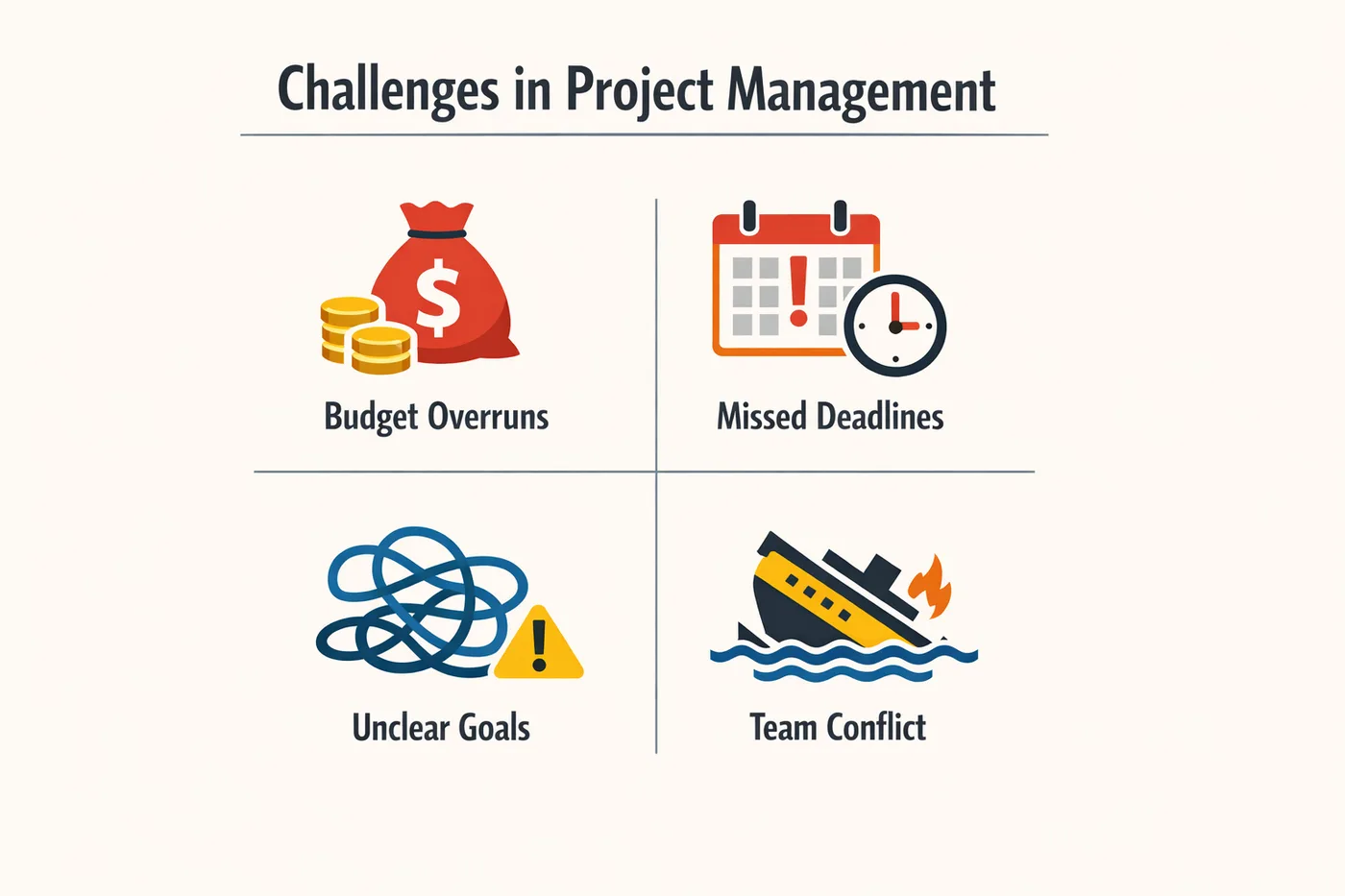
Projects without clear leadership collapse in predictable ways. The first symptom is usually a developer asking where to put a secret. The second is someone committing it to git anyway.
When Process Becomes the Problem
Most teams start with no process, then overcorrect. A founder reads about secrets management and decides every API key needs a vault, a rotation schedule, and an audit trail. Two weeks later, developers are storing credentials in Slack DMs because the official pipeline takes forty minutes to provision a test token.
The real cost isn't the leaked key. It's the three days spent retrofitting access controls after the fact, the meeting where everyone agrees to "do better," and the identical incident six weeks later.
The Usability Gap
A secrets management system that requires five steps and two approvals will be bypassed. Developers don't skip security because they're careless — they skip it because the approved path blocks shipping. When the process is too complex, developers resort to insecure practices.
I've seen teams with enterprise vaults where half the production secrets live in a shared 1Password because nobody documented how to use the vault programmatically. The tool existed. The onboarding didn't.
The best security control is the one people actually use.
Visibility Without Action
Many projects collect security data but don't act on it. Dependency scanners flag 47 vulnerabilities, half of them in packages three layers deep. Nobody knows which ones matter. The backlog grows. Security centers aggregate findings across workspaces, but someone still has to decide what to fix first.
Without leadership, security becomes a dashboard everyone checks and nobody owns. The real question isn't whether you have visibility — it's whether you have a person who will page someone at 2 AM when a critical finding appears in a published app.
The Rotation Problem
Secret rotation sounds simple until you try it. Every rotated credential has upstream and downstream dependencies. Rotate a database password and three microservices stop talking to each other. Rotate an API key and the CI/CD pipeline fails silently until someone notices the staging deploy hasn't run in four days.
Manual rotation introduces human error. Automated rotation introduces automation error, which is worse because it happens at scale. The missing piece is someone who maps the dependency graph before the first rotation and writes the runbook for when it breaks anyway.
Documentation Drift
Teams write security procedures after an incident, then never update them. Six months later, the runbook references a Slack channel that no longer exists and a secrets pipeline that was deprecated in Q2. New developers follow the outdated docs, hit errors, ask in Slack, and get three conflicting answers.
The problem isn't writing documentation. It's maintaining it. That requires someone whose job includes "notice when the process changed and update the wiki."
Solution Steps
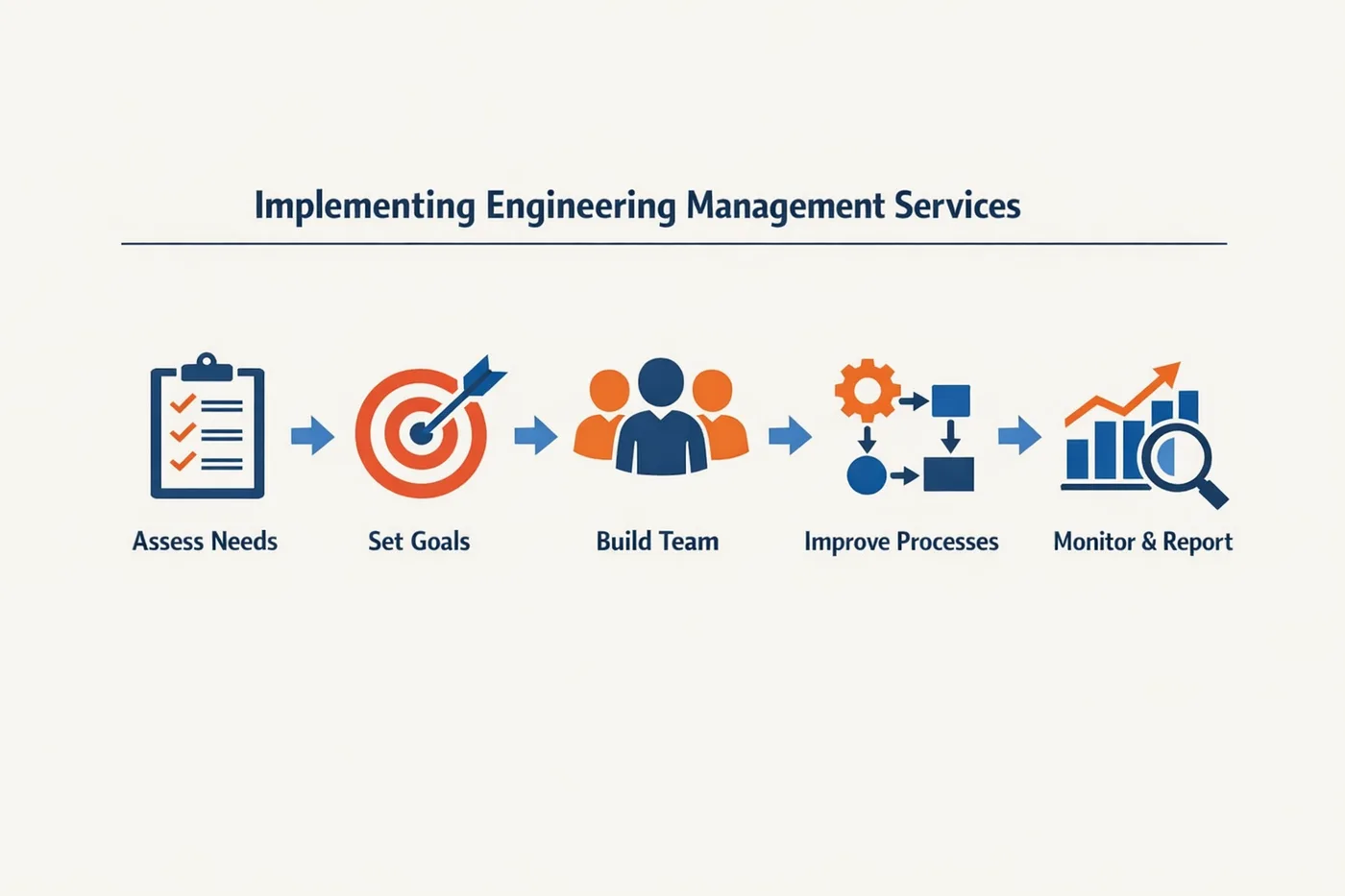
Implementing Engineering Management Services requires a structured approach. The steps below outline how to introduce effective leadership into your project without derailing momentum.
Step 1
Map scope before picking tools
Document what you're building before you choose how to build it. Write down the core features, the technical constraints, and the success criteria. If requirements are unclear, exploration comes first. Cursor's Plan Mode asks clarifying questions and generates a reviewable plan before any code changes — use that pattern whether you're working with AI tools or human engineers.
Step 2
Create a reviewable plan
Generate an ordered task list that breaks the project into discrete milestones. Replit Agent demonstrates this workflow: switch to Plan mode, describe the project, and let the system produce a structured task list you can refine. The plan becomes the contract between intent and execution. Save it to your workspace for team reference and future audits.
Step 3
Review and refine before building
When the first plan doesn't match your vision, revert and refine rather than patching mid-flight. Cursor documentation notes that reverting changes and updating the plan produces cleaner results than trying to fix an in-progress build through follow-up prompts. This applies to human teams too: rework the PRD sections before reworking the code.
Step 4
Delegate implementation with clear instructions
Once the plan is precise, hand it off. For larger changes, spend extra time on scoping — the hard part is figuring out what change should be made, not writing the code. With the right instructions, implementation becomes a mechanical step. This is true whether you're delegating to an AI agent or a contract developer.
When to Use Plan Mode vs Direct Execution
Use formal planning when requirements are unclear or architectural decisions need review. Skip it for routine tasks where the path is well-understood. The decision point is simple: if you can't describe the exact change in two sentences, you need a plan first.
| Scenario | Approach | Reason |
|---|---|---|
| Unclear requirements | Plan mode | Exploration needed before scope is known |
| Architectural decision | Plan mode | Approach must be reviewed before building |
| Routine fix | Direct execution | Path is obvious, risk is minimal |
| Large feature | Plan mode | Precision in scoping saves rework later |
The pattern holds across tools and team structures. Whether you're using Cursor, Replit, or managing human engineers, the same discipline applies: unclear scope demands upfront planning, clear scope permits immediate action.
Tips and Tricks
Selecting and running Engineering Management Services is less about process diagrams and more about what breaks when nobody's watching.
Make onboarding trivial or watch engineers route around you
If your management layer requires three Slack channels and a Jira ticket to answer a question, engineers will build shadow processes. A secrets management solution that takes four approval steps gets replaced by a .env file in the repo. The same principle applies to any engineering management service: complexity drives defection.
I've seen teams adopt tooling in two days when the onboarding doc was a single markdown file with copy-paste commands. I've also seen six-month rollouts fail because the internal wiki had seventeen pages of prerequisites.
Restrict access by default; expand only when you see the invoice
Engineers should not have access to all secrets in the secrets management system. The Least Privilege principle isn't a compliance checkbox — it's damage control for when credentials leak. The secret management system needs to provide the ability to configure fine-grained access controls on each object and component.
Manual maintenance not only increases the risk of leakage; it also introduces the risk of human errors while maintaining the secret. Limit or remove human interaction with actual secrets through automation: secrets pipelines that handle creation and rotation, ephemeral credentials that expire after a single session, or dynamic secrets generated per request.
Step 1
Audit who touches what
Monitor who accesses the secret at the secret management system. If CI/CD credentials are used from a different IP than where the CI/CD system runs, alert and assume the secret is compromised. Track whether the user of the secret is coming from an expected IP with an expected user agent.
Continuous monitoring beats perfect launch-day security
Security findings from three months ago are archaeological artifacts. Continuously monitor security after publishing as your project changes. Dependencies shift, new CVEs drop, and that package you trusted in Q2 might be abandoned by Q4.
Schedule recurring scans. Review dependency vulnerabilities by project or by vulnerability. Spot externally published projects, abandoned projects, projects with no owner, and projects with open security findings in a single dashboard. Fixes are still applied at the project level, but portfolio visibility tells you where to look first.
Standardize or drown in documentation
Even when a company centralizes its secrets management to just one solution, you will often have to secure the primary secret of that secrets management solution in a secondary secrets management solution. The more secrets management solutions you use, the more documentation you need.
It should be immediately apparent to an organization what a secret is used for and where to find it. Standardization should include secrets lifecycle management, authentication, authorization, and accounting of the secrets management solution. When users can read or update the secret in a system, the secret can now leak through that user and the system they used to touch the secret.
Create detection rules for the full lifecycle
Create detection rules for each stage of the secret lifecycle. Create documentation and update it regularly to inform the developer community on procedures and systems available at your organization, what types of secrets management you expect, how to test for secrets, and what to do in the event of detected secrets. Identify when secrets may be handled differently depending on threat risk or data classification.
Document any upstream or downstream dependencies that could potentially be broken during secret rotation. Update the runbook after every incident — the next rotation failure will look like the last one, and the person on call shouldn't have to reverse-engineer the fix.
For a broader view of planning and execution in technical projects, see App Development Plan: Dev Plan Guide for Non-Technical Founders (2025).
Conclusion
Engineering Management Services matter when the gap between what you planned and what you shipped becomes a pattern. Leadership closes that gap — not by adding process, but by making the invisible visible: who owns what, what breaks when you rotate a secret, which project has been abandoned with PII still published.
The pattern I've seen across hundreds of builds is simple: projects without clear ownership drift. They accumulate security debt, lose institutional knowledge, and eventually require emergency intervention that costs more than steady leadership would have. The fix isn't heroics — it's boring operational discipline applied consistently.
Effective engineering management services provide three things: accountability structures that survive turnover, documentation that actually gets maintained, and the operational reflex to spot a problem before it becomes a crisis. When you can answer "who owns this" and "what happens if we change that" without a Slack thread, you have leadership. When you can't, you have a project that will eventually need rescue.
The choice isn't whether to invest in leadership — it's whether to pay for it upfront or after the first incident. Most founders learn this the expensive way. A well-structured development plan makes the cost predictable and the ROI measurable. The alternative is crossing your fingers and hoping your secrets management doesn't leak before you notice.
Start with one question: can you restore your project to yesterday's state in under ten minutes? If the answer is no, you don't have a tooling problem — you have a leadership problem. Engineering Management Services exist to make that answer yes, every time.
Related reading
When to Hire a Systems Engineering Approach for Complex Apps
Engineering Software Your Development Team Needs in 2025
How to Build Engineering Capabilities for Your Software Project