
When to Hire a Systems Engineering Approach for Complex Apps
Top takeaways
- A systems engineering approach integrates UI and backend logic to streamline complex app development
- This methodology reduces risks by enabling controlled, iterative building and testing cycles
- Knowing when to adopt systems engineering prevents costly rewrites and scope creep
- Modern tools support collaborative workflows between design, product, and engineering teams
- The approach is most valuable when app complexity exceeds what ad-hoc development can manage
Introduction
A systems engineering approach for complex apps treats your application as interconnected components, not isolated tasks. Complex apps fail when founders treat development like stacking features. I've watched teams burn through budgets rebuilding the same functionality three times because they never mapped dependencies or planned for integration points.
The question isn't whether systems engineering matters — it does. The question is when the overhead pays off. For a landing page or simple CRUD app, you don't need it. For anything with multiple data sources, real-time updates, third-party integrations, or regulatory requirements, you do.
Systems engineering means defining requirements before writing code, modeling how components interact, and testing integration points early. It's the difference between discovering your payment processor can't handle your checkout flow on launch day versus catching it in week two of planning your development roadmap. The upfront time investment prevents the expensive surprises that kill momentum.
Modern platforms now build both UI and backend logic together, letting teams preview changes in real time and catch integration issues before they compound. This end-to-end visibility is what makes a systems approach practical for solo founders and small teams — you're not hiring a separate systems architect, you're adopting tools that enforce the discipline by default.
What Problems Does a Systems Engineering Approach for Complex Apps Solve?
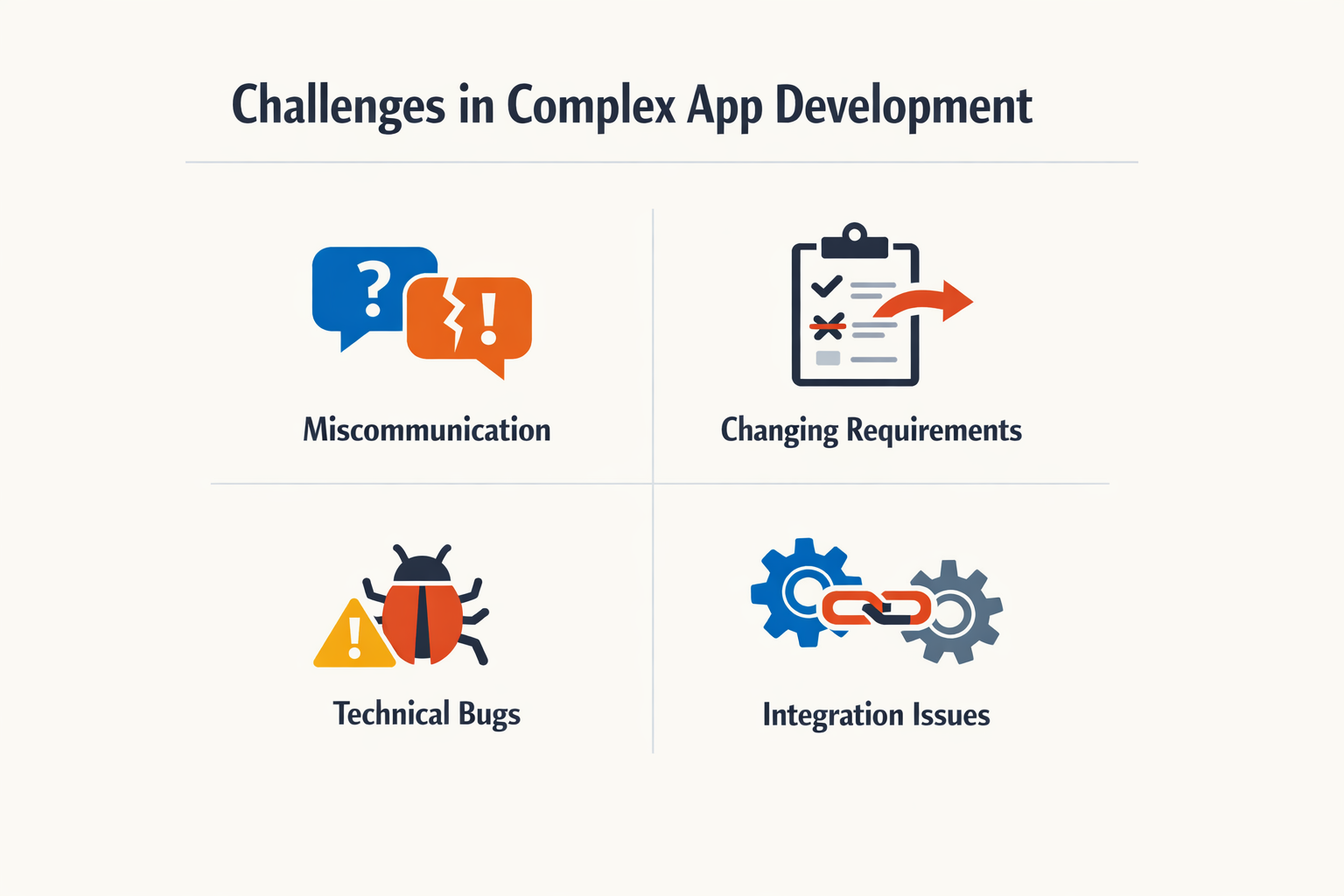
Complex apps fail in predictable ways. Requirements drift. Permissions sprawl. Secrets leak. Teams ship features that break other features because no one mapped the dependencies first.
The root problem is not technical debt — it's planning debt. Most founders and teams jump straight to implementation without defining trust boundaries, enumerating user types and resources, or planning how components will interact under load. When you skip the architecture phase, you inherit every downstream cost of that omission.
Scope Creep and Unclear Requirements
You cannot build what you have not defined. Vague requirements produce vague implementations. When a founder says "users should be able to share documents," the dev has to guess: share with whom, under what conditions, with what permissions, and what happens when those permissions change.
Unclear requirements force developers into a loop of build-test-revise that burns budget and morale. Plan Mode tools now let you generate reviewable implementation plans before writing code, but the plan is only as good as the requirements you feed it. Garbage in, garbage out.
Permission Sprawl and Security Gaps
Failure to enforce least privileges early in the SDLC jeopardizes confidential resources. When you do not enumerate user types, resources, and operations during design, you end up granting broad permissions and then trying to revoke them later — a political and technical nightmare.
Permission creep is easier to prevent than to fix. A Sales Representative may need customer database access from the internal network during business hours, but not from home at midnight. If you do not define those boundaries in the design phase, you will discover the gap during an audit or a breach.
Careful planning and implementation of least privileges early in the SDLC reduces the risk of needing to revoke permissions that are later deemed overly broad. After deployment, periodic reviews catch privilege creep, but only if you documented the original intent.
Third-Party Component Vulnerabilities
Even secure applications inherit vulnerabilities from third-party libraries and frameworks. Writing complex, secure software is hard. The most competent developers working on high-quality projects make mistakes. Assume any third-party component you incorporate could be or become subject to an authorization vulnerability.
Without a product spec or PRD that inventories dependencies and defines how you will detect and respond to vulnerable components, you are flying blind. Tools like Dependency Check belong in the SDLC from day one, not bolted on after the first CVE hits your stack.
How to Implement a Systems Engineering Approach for Complex Apps
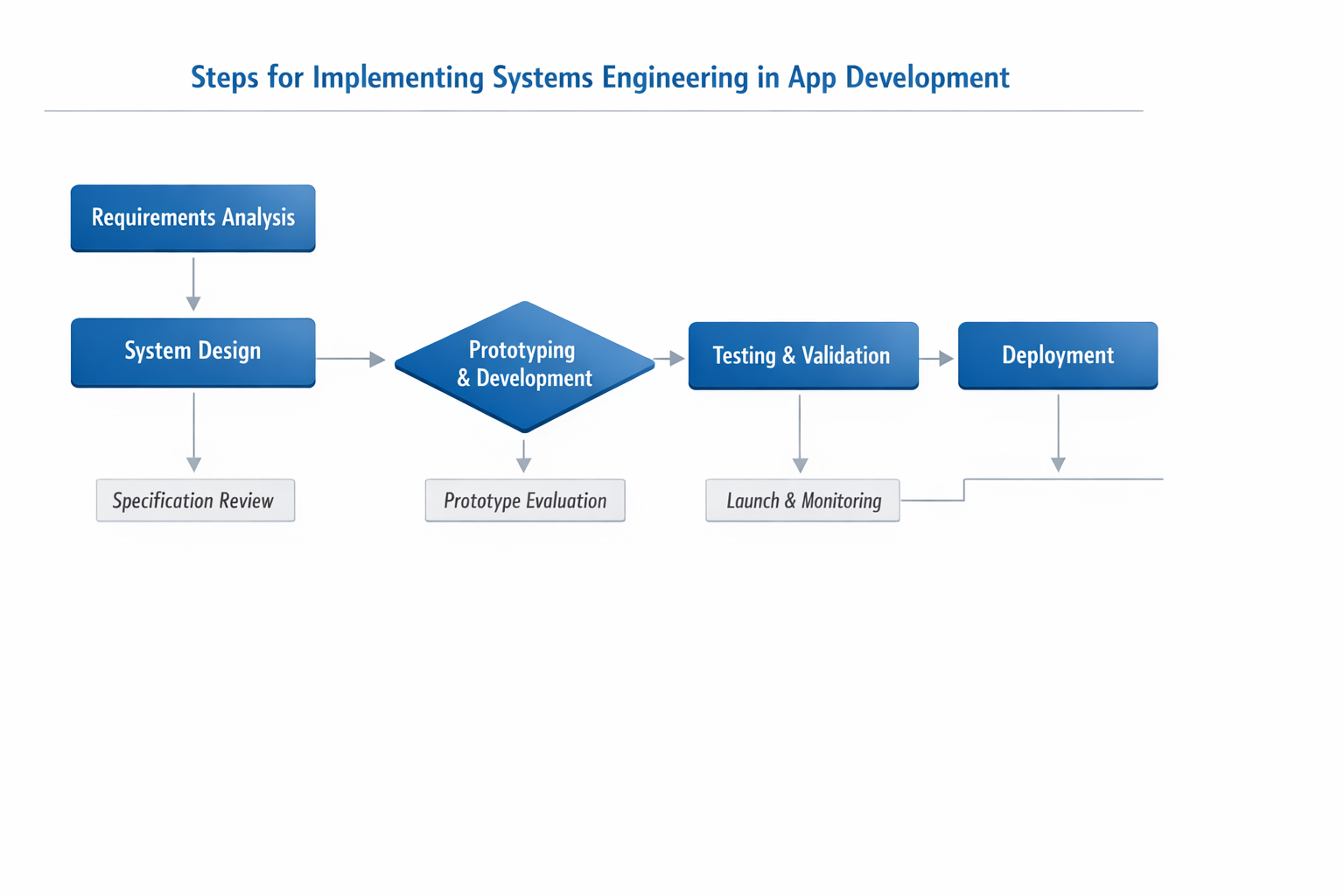
Adopting a systems engineering approach for complex apps isn't a binary switch. It's a sequence of deliberate choices that reduce chaos before it compounds.
Step 1
Map trust boundaries and user operations
Start by defining who accesses what. Enumerate user types, exposed resources, and permitted operations on those resources. For every user-resource pair, determine which operations that user must perform. A sales rep might need customer database access from the internal network during business hours but not from home at midnight. Document these boundaries before writing requirements.
Step 2
Create a reviewable implementation plan
Use a planning phase to generate a detailed roadmap before any code is written. Tools that support plan-before-build workflows let you ask clarifying questions, explore architectural decisions, and refine scope. Save plans to your workspace for team review and future reference. This step is non-negotiable for unclear requirements or architectural pivots.
Step 3
Build validation tests from the design phase
Create tests that validate the permissions and operations mapped in step one. These tests enforce that the system behaves as designed, not as assumed. Run them before deployment and periodically after, checking for privilege creep where users accumulate permissions beyond the original design.
Step 4
Incorporate dependency monitoring into the SDLC
Third-party components carry authorization and security risks even in otherwise secure applications. Establish processes for detecting and responding to vulnerable dependencies. Integrate tools like Dependency Check into your software development lifecycle and subscribe to vulnerability feeds from vendors or the NVD.
Step 5
Refine plans when agent output misses the mark
When an automated build doesn't match intent, revert changes and refine the plan rather than patching through follow-up prompts. A precise, well-scoped plan delegates implementation cleanly. The hard part is figuring out what change to make; with clear instructions, execution becomes mechanical.
When Should You Use a Systems Engineering Approach for Complex Apps?
Use this approach when requirements are unclear and you need to explore before committing to scope. Use it for architectural decisions where you want to review the approach before building. Skip it for quick changes or tasks you've done many times — jumping straight to implementation is fine when the path is known.
For more on scoping and planning workflows, see App Development Plan: Dev Plan Guide for Non-Technical Founders (2025) and our one-page PRD template for MVPs.
Tips and Tricks
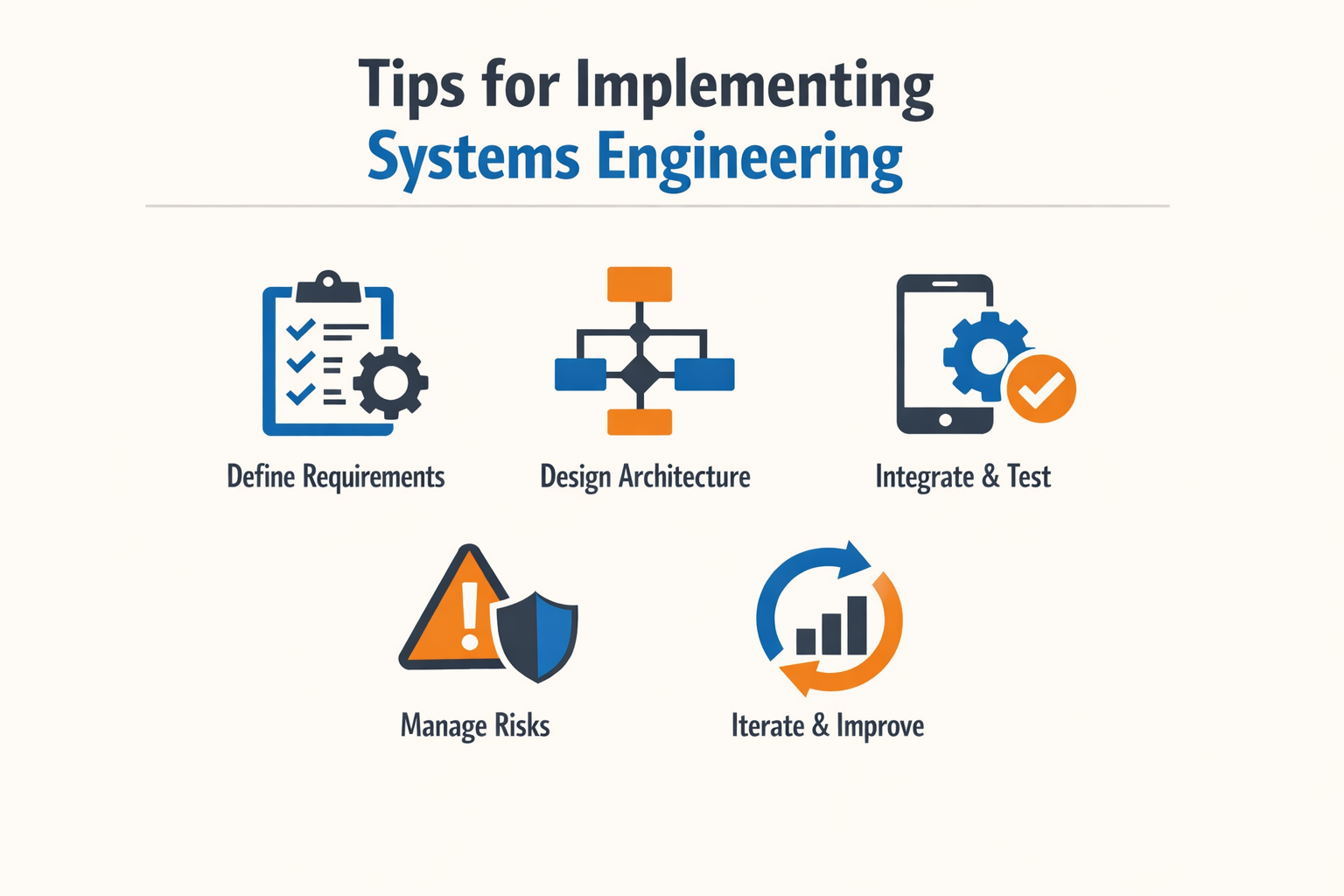
Implementing a systems engineering approach requires more than theory. Here's what works when you're building something complex.
Plan Before You Code
Map the project before anyone writes a line. Replit's Plan mode demonstrates this: you create an ordered task list, review it, refine it, then approve it before Agent starts building. The same principle applies whether you're using an AI tool or a human team. Write down the components, their interactions, and the order of work. If you can't explain the architecture in a simple diagram, you don't have one yet.
Use Modern Tooling for Collaboration
Pick a stack that supports cross-functional work. Tools like Next.js and Tailwind let designers, product people, and engineers work in the same codebase without stepping on each other. V0 shows how this looks in practice: you get end-to-end development, real-time preview, and visual feedback that non-technical stakeholders can actually parse. The goal is to reduce translation overhead. When your PM can see the UI update in real time, you spend less time in Slack explaining what "responsive" means.
For a deeper dive into structuring these workflows, see our guide on PRD Sections Explained: What to Include with Examples.
Automate Secrets Management Early
Complex apps have complex credentials. API keys, database passwords, service tokens — they multiply fast. A secrets pipeline handles creation, rotation, and access control without human intervention. The Least Privilege principle applies: engineers shouldn't see every secret, and manual copy-paste introduces both leakage risk and typos. Set up automation before you have ten developers asking for production keys in Slack.
The fewer humans who touch a production secret, the fewer audit logs you'll need to explain later.
Limit Human Interaction with Critical Systems
Human error scales with manual steps. Reduce the surface area. Use CI/CD pipelines that deploy on merge. Use infrastructure-as-code so environment changes are versioned. Use automated testing so you catch regressions before they hit staging. The systems engineering approach isn't about removing people — it's about removing the repetitive, error-prone tasks that waste their time.
Conclusion
A systems engineering approach for complex apps delivers measurable value when your project crosses the threshold from simple feature work into multi-system orchestration. You hire it when the cost of integration failure exceeds the cost of structured planning — when one missed dependency can cascade into weeks of rework.
The approach pays off through reduced rework cycles, clearer handoffs between teams, and a single source of truth that keeps frontend, backend, and infrastructure aligned. Modern tooling like V0 supports end-to-end development workflows, combining UI and backend logic in one platform so you can ship MVPs without hiring a full dev team. Defense-in-depth security measures — parameterized queries, least-privilege database accounts, and layered protections — become manageable when you plan them into the system from day one rather than retrofitting them later.
I've watched solo founders skip the upfront planning and pay for it in the third rebuild. The pattern is consistent: complexity grows faster than informal communication can handle. A lightweight systems engineering discipline — even just a structured PRD and a dependency map — prevents that spiral. You don't need aerospace-grade process, but you do need a plan that survives contact with reality.
Hire the approach when you can't afford to guess. Ship faster by building once.
Frequently asked questions
When should I use a systems engineering approach for complex apps?
Use a systems engineering approach for complex apps when requirements are unclear, when architectural decisions require review before building, or when your app involves multiple data sources, real-time updates, third-party integrations, or regulatory requirements. Skip it for simple CRUD apps or quick changes where the implementation path is already known.
What are the main benefits of a systems engineering approach?
A systems engineering approach for complex apps reduces rework cycles, prevents costly rebuilds, catches integration issues early, and provides a single source of truth across frontend, backend, and infrastructure teams. It transforms planning debt into structured architecture that scales with your project complexity.
How does systems engineering prevent security vulnerabilities?
Systems engineering enforces least-privilege principles early in the SDLC by mapping user types, resources, and operations during design. It incorporates dependency monitoring to detect third-party vulnerabilities and builds validation tests that catch permission creep before deployment, preventing the security gaps that emerge from ad-hoc development.
What tools support a systems engineering approach for complex apps?
Modern platforms like V0, Replit's Plan mode, and Cursor support systems engineering by combining UI and backend logic in one workflow. These tools let you generate reviewable implementation plans, preview changes in real time, and catch integration issues before they compound — making structured development practical for solo founders and small teams.