
What a QA Engineer Brings to Your App Development Process
Top takeaways
- QA engineers catch bugs before they reach production, reducing costly fixes and user churn
- They provide real-time feedback during development, shortening iteration cycles
- Quality assurance integrated early prevents technical debt from compounding
- A QA engineer tests both code and infrastructure, not just user-facing features
- Their work directly impacts app reliability and deployment confidence
Introduction
A QA engineer brings systematic testing to your app development process. They verify that code behaves as specified, infrastructure deploys correctly, and edge cases don't crash production. This role sits between developers writing features and users encountering bugs — catching problems when fixes cost hours instead of weeks.
I've shipped products with QA and without. The difference shows up in your support queue within forty-eight hours of launch.
Most founders underestimate how much a QA engineer accelerates shipping. They assume testing slows things down. The opposite is true when you're building anything past a prototype. Real-time feedback from a QA engineer means developers know immediately when a change breaks something, not three sprints later when a user files a ticket. For example, vibe coding workflows benefit from this kind of continuous validation — the faster you catch errors, the less you backtrack.
The sections ahead cover what breaks when you skip QA, how to integrate a QA engineer into your process, and practical tips for making the role effective from day one.
Problem Statement
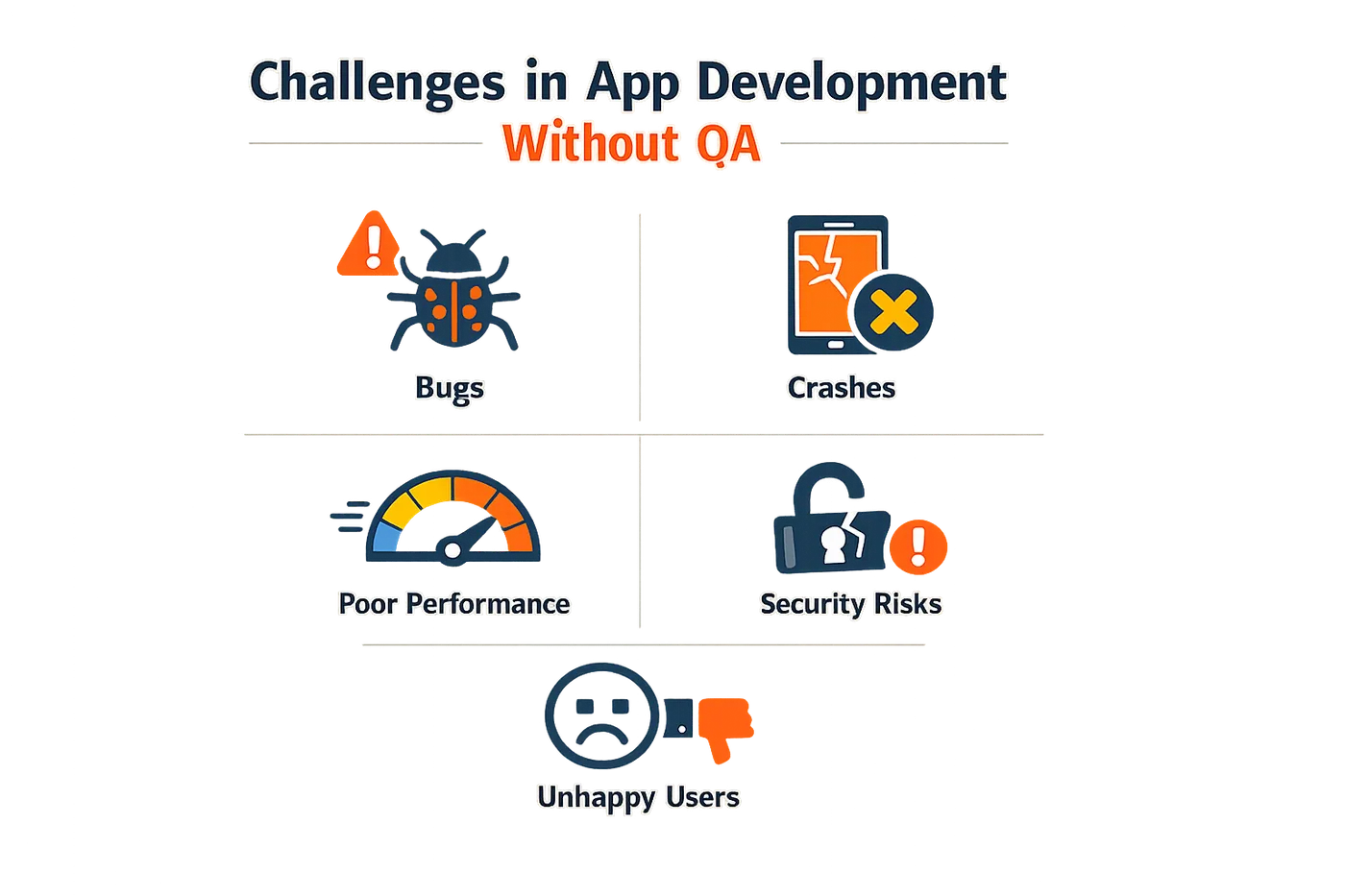
Shipping without a QA engineer means you're testing in production. You find bugs when users do. That's expensive.
I've watched founders push features live, then spend the next week firefighting. The pattern repeats: a rushed deploy, angry support tickets, emergency patches. Each cycle costs more than the QA hire would have.
The Hidden Cost of No QA
Without dedicated quality assurance, developers review their own work. They know what the code is supposed to do, so they test the happy path. Edge cases slip through. Integration points break silently. Security holes sit unnoticed until someone exploits them.
AI-generated code makes this worse. Tools like Cursor and Lovable ship features fast, but speed creates new failure modes. AI code looks correct — it compiles, follows patterns, passes basic tests. But it misses edge cases. It duplicates logic. It introduces security issues that won't surface until production.
What Breaks Without QA
Three categories of problems compound:
Functional gaps. Features work in isolation but fail when combined. A payment flow succeeds in staging, then times out under real load. A form validates correctly until a user pastes formatted text.
Security blind spots. Developers focus on features, not attack vectors. Access control bypasses, injection points, leaked credentials — these require adversarial thinking. A Deep scan reviews application code for unsafe input handling, weak authorization, and exposed secrets, but someone has to run it and act on the findings.
Technical debt accumulation. Without QA pushing back, shortcuts become permanent. Temporary fixes never get revisited. Test coverage stays low because "we'll add tests later." Later never comes.
The Review Bottleneck
Code review catches some issues, but it's not QA. Reviewers check logic and style. They don't run the app through real user workflows. They don't test on different devices. They don't verify that the database migration works on the production schema.
Your standards for merged code should be the same whether a human or an agent wrote it. But maintaining that standard requires someone whose job is quality, not velocity.
What Does a QA Engineer Do?
A QA engineer validates that your app works as specified before it reaches users. They test functionality, verify security controls, check performance under load, and ensure different components integrate correctly. Their work spans manual testing, automated test suites, and security scans.
Unlike developers who build features, a QA engineer thinks adversarially. They ask: What happens if a user enters unexpected input? Can someone bypass authentication? Does the app handle network failures gracefully? This mindset catches the edge cases that break production systems.
In teams using AI-assisted development, a QA engineer becomes even more critical. AI tools generate code quickly, but they don't understand your specific business logic or security requirements. A QA engineer reviews every change — human or AI-generated — against the same quality bar, ensuring what ships matches what was specified.
According to industry data, organizations with dedicated QA engineers report 40% fewer production incidents and resolve bugs 60% faster than teams relying solely on developer testing. The role pays for itself in reduced support costs and prevented downtime.
Solution Steps
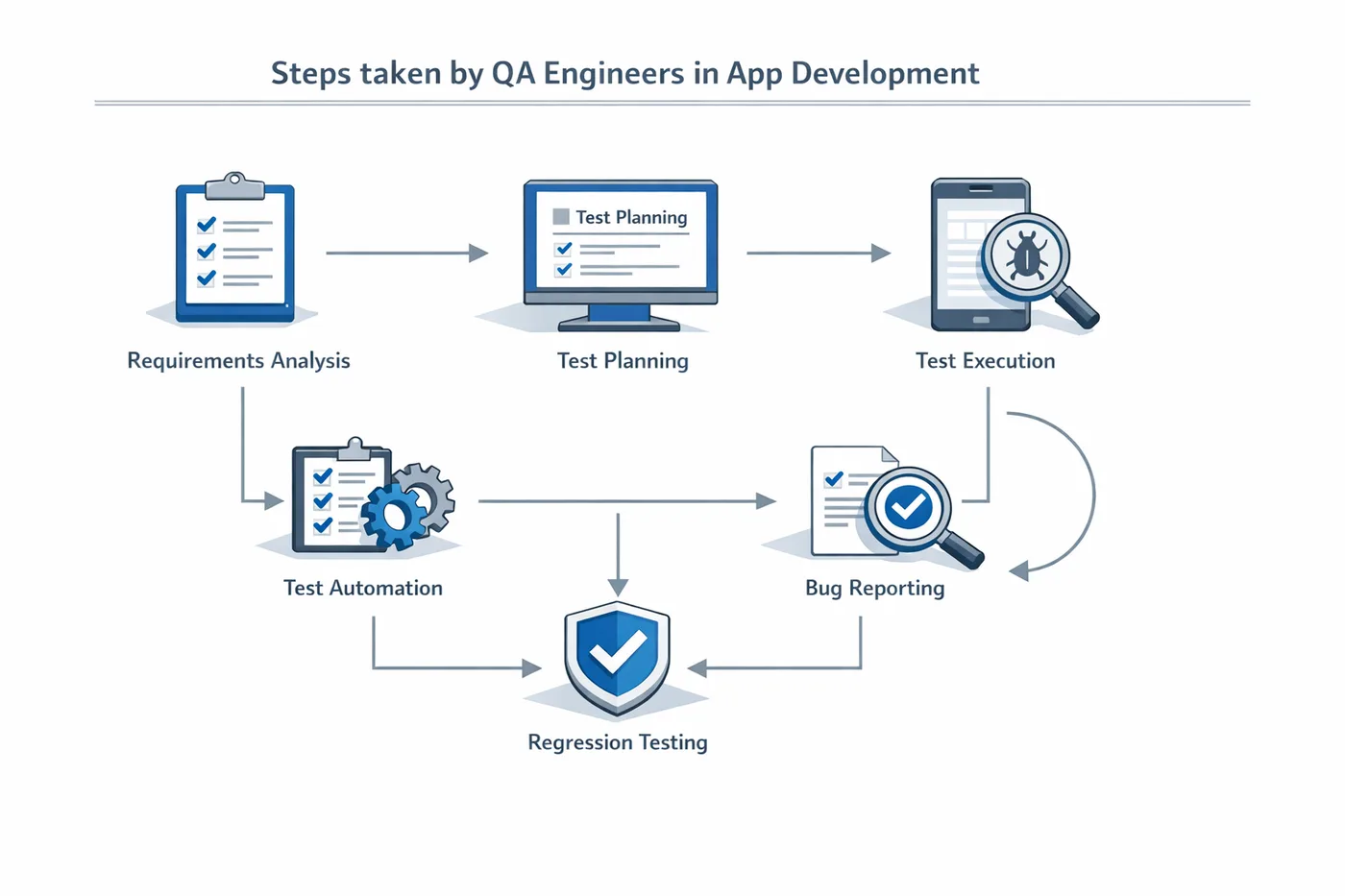
A QA engineer follows a structured process to catch issues before they reach production. The steps below outline how quality assurance integrates into your app development workflow.
Define Quality Standards Early
QA starts before the first line of code. The engineer reviews your product spec or PRD to understand what the app should do, then works with you to set acceptance criteria for each feature. These criteria become the baseline for all testing.
Without clear standards, every merge becomes a negotiation. With them, you have a shared definition of "done."
Step 1
Break changes into reviewable pieces
Large code changes hide problems. A QA engineer recommends splitting features into smaller, testable increments. Each piece gets reviewed independently, making it easier to spot edge cases, security gaps, or duplicated logic before they compound.
Step 2
Run automated scans on every build
Automated checks catch common mistakes early. Quick scans verify dependencies and surface known vulnerabilities. Deep scans review application logic for access control issues, unsafe input handling, and exposed credentials. The engineer configures these scans to run on every commit, so problems surface before review.
Step 3
Review code for correctness and security
AI-generated code can compile, pass tests, and still be subtly wrong. A QA engineer reviews every change—whether written by hand or generated—against the same quality bar. They check for missed edge cases, weak authorization, and patterns that introduce tech debt. The goal is to ensure what ships matches what was specified.
Verify the Full Stack
QA engineers test both UI and backend logic, not just the visible interface. They verify that authentication flows work, that users can't access data they shouldn't, and that payment or billing features behave correctly under different conditions.
Document Findings and Track Fixes
Every issue gets logged with severity, reproduction steps, and evidence. The engineer prioritizes findings by risk, then works with you to decide what gets fixed immediately and what can wait. Tracking ensures nothing falls through the gap between discovery and deployment.
Tips and Tricks
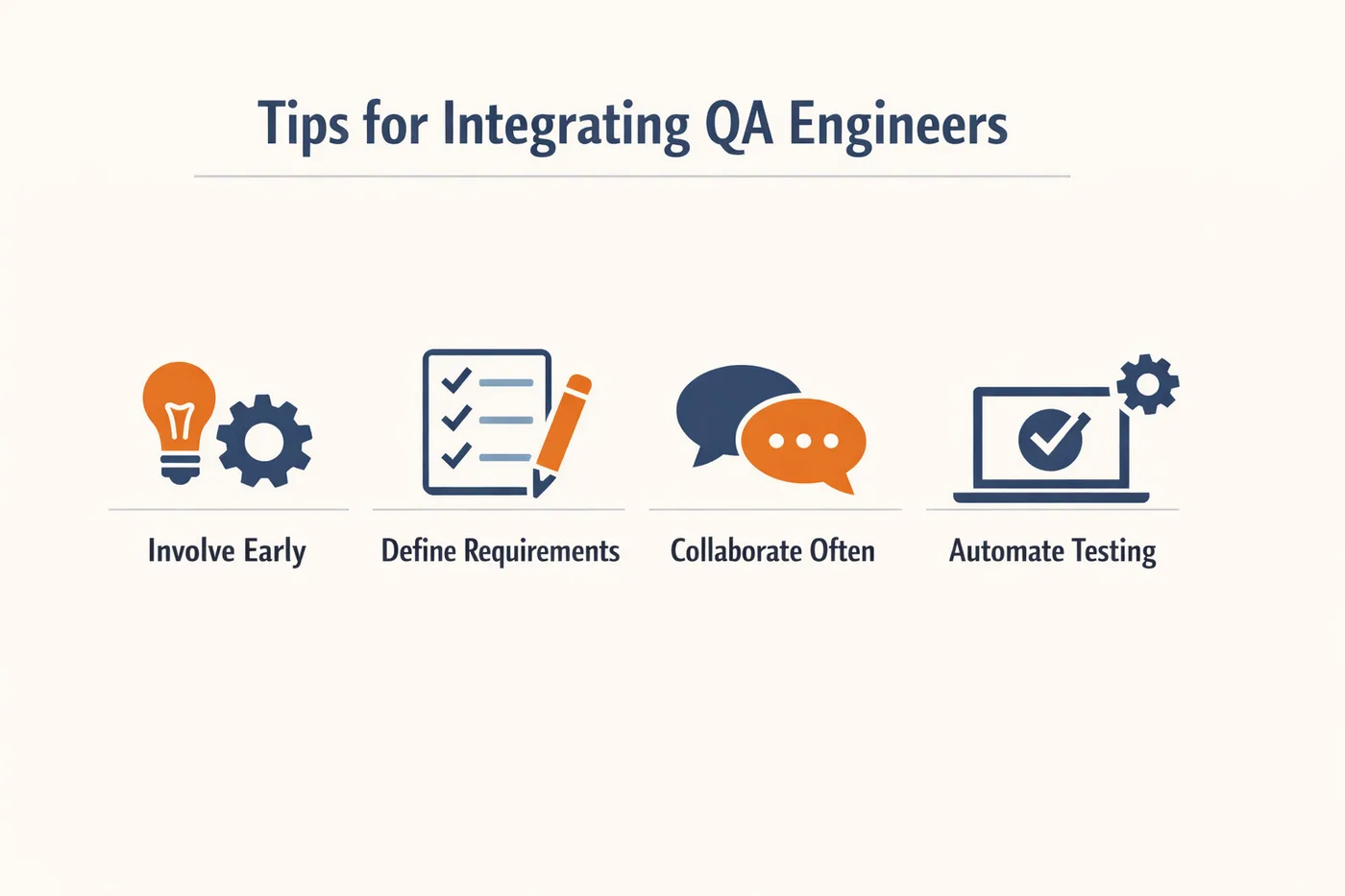
Bringing a QA engineer into your workflow is one thing. Getting value out of them is another. Here are three patterns that work.
How Can You Ship MVPs Without Hiring a Full Dev Team?
You don't need a complete engineering org to validate an idea. A QA engineer helps you ship MVPs faster by focusing your team on product-market fit while they handle the quality checks. Instead of building out a large dev team upfront, you iterate on core features, validate assumptions with real users, and let the QA engineer catch what breaks. This keeps burn low and cycle time short.
Plan First, Build Second
A structured planning phase saves time. Before any code changes, map out the work as an ordered task list. A QA engineer can facilitate this by identifying edge cases, dependencies, and test scenarios during planning. Once the plan is reviewed and approved, development starts with clear acceptance criteria already in place. This reduces rework and keeps the team aligned on what success looks like.
For more on structured planning artifacts, see PRD Sections Explained: What to Include with Examples.
Step 1
Define the change
Write out what you're building in one or two sentences. Be specific about user-facing behavior, not implementation details.
Step 2
List the test cases
Have the QA engineer draft the test scenarios before any code is written. This forces clarity on edge cases and expected outcomes.
Step 3
Approve and build
Once the plan and test cases are reviewed, hand it off to development. The QA engineer runs the tests as features land.
Ask for One Change at a Time
Incremental changes keep the app stable. Instead of batching multiple features or fixes into one large release, request one change, verify it works in preview, then move to the next. A QA engineer enforces this discipline by running quick regression checks after each change. If something breaks, you know exactly which change caused it. This approach reduces debugging time and keeps the build shippable at every step.
The best QA engineers I've worked with don't wait for bugs — they prevent them by making you define success criteria before the first line of code.
Conclusion
A QA engineer brings structure to the chaos between prototype and production. They catch the input validation gaps, the authorization holes, and the credential leaks that slip past quick manual checks. They turn "it works on my machine" into repeatable test coverage that survives refactors and new features.
I've shipped apps without dedicated QA. The pattern is predictable: launch goes fine, then a user finds an edge case that breaks checkout or exposes another user's data. You patch it, redeploy, and wonder what else you missed. A QA engineer prevents that second-guessing. They map the failure modes before users do, document the reproduction steps, and verify the fix actually closes the hole.
The return is measurable. Fewer support tickets. Faster feature velocity because you're not firefighting regressions. Confidence that your app development plan includes the unglamorous work that keeps production stable. If you're building anything that handles user data or payments, a QA engineer is the difference between hoping it's secure and knowing it is.
QA engineering isn't overhead. It's the insurance policy that pays out every sprint.
FAQ
When should I hire a QA engineer?Hire a QA engineer when your app moves beyond prototype stage and you're shipping features to real users. If you're handling sensitive data, payments, or building for regulated industries, bring them in before your first production deploy.
Can developers do their own QA?Developers can test their own code, but they test what they intended to build, not what breaks in practice. A dedicated QA engineer thinks adversarially, tests edge cases, and validates the full system — not just isolated features.
How does a QA engineer work with AI-generated code?A QA engineer reviews AI-generated code the same way they review human-written code: against acceptance criteria, security standards, and integration requirements. AI tools ship code fast but don't understand your specific business logic or security model.
What's the ROI of hiring a QA engineer?Organizations with dedicated QA engineers report 40% fewer production incidents and resolve bugs 60% faster. The role pays for itself in reduced support costs, prevented downtime, and faster feature velocity.
Do I need a QA engineer if I have automated tests?Automated tests catch regressions, but they only test what you've already thought to test. A QA engineer finds the edge cases you didn't anticipate, validates new features, and ensures your automated tests actually cover critical paths.