
App Development Cost: How Much Does It Cost to Build an App in 2026?
Top takeaways
- App development costs in 2026 vary widely based on complexity, platform choice, and build method
- No-code and AI-powered tools have fundamentally changed the economics of building apps
- Understanding cost drivers upfront prevents budget overruns and helps you choose the right approach
- Traditional agency builds still exist, but solo founders now have viable alternatives that cost a fraction of the price
- Your biggest cost variable is usually whether you're paying for labor or leveraging automation
Introduction
How Much Does It Cost to Build an App in 2026? The answer ranges from under $500 for a no-code MVP to over $500,000 for a custom enterprise platform. The price depends on complexity, platform choice, feature scope, and whether you hire an agency or use AI-assisted tools.
I've built apps both ways — burning cash on contractors and shipping solo with AI tools. The cost difference isn't incremental. It's a different order of magnitude.
The question "How Much Does It Cost to Build an App in 2026?" doesn't have one answer. A landing page costs different than a SaaS platform. A mobile game costs different than a booking system. But the range is knowable, and the factors are concrete.
This guide breaks down what drives app development costs in 2026, from design and features to platform choices and tooling. You'll see the real numbers behind different approaches and learn how to estimate your own project without guessing.
What Changed Between 2024 and 2026
AI-powered builders entered production use. Tools that were experimental two years ago now handle full-stack builds — databases, hosting, and deployment included. That shift moved the baseline cost floor down hard.
Traditional agency quotes still start at $50K for a simple app. But a solo founder with vibe coding tools can ship the same scope in weeks for under $500 in tooling costs. The gap is real, and it's widening.
The rest of this article walks through the cost structure piece by piece. You'll understand what you're paying for, where to cut, and which corners not to cut.
Why Estimating App Development Costs Is So Hard
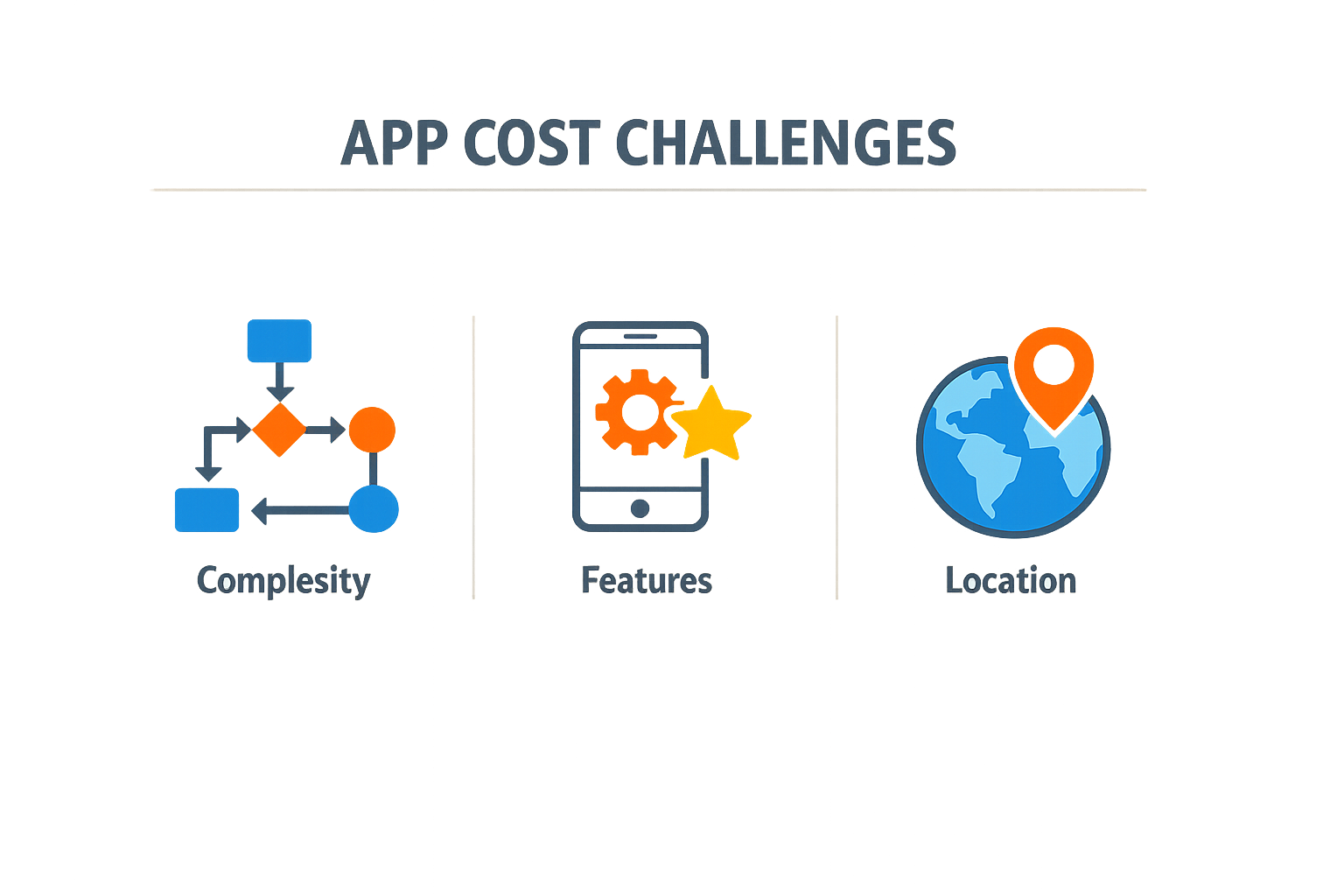
Estimating app development costs in 2026 is harder than it looks. The price tag depends on variables most people don't track until they're already committed: feature scope, platform choice, design complexity, and whether you're building from scratch or assembling existing components.
Why Traditional Cost Estimates Miss the Mark
Most cost calculators assume you know what you want. They don't account for the iteration cycles that happen when you see your idea rendered for the first time. A "simple" product grid for an online ceramics storefront becomes expensive the moment you add filters, real-time inventory, or mobile optimization. The initial estimate rarely survives contact with actual user feedback.
Another blind spot: tooling decisions. In 2026, no-code and AI-assisted platforms like Agent let non-technical founders ship working apps without writing a line of code. But switching from a traditional dev shop to a no-code tool mid-project resets your timeline and budget. The choice you make on day one determines whether you're paying for developer hours or subscription tiers.
The Hidden Variables That Inflate Budgets
Most founders underestimate three things:
- Scope creep from vague requirements. If you can't describe your app in a structured PRD, your developer will guess — and charge you to fix the guesses later.
- Platform fragmentation. Building for iOS, Android, and web simultaneously triples QA time and multiplies edge cases.
- Post-launch maintenance. The app you ship on launch day is the cheapest version you'll ever own. Every OS update, API change, and user-requested feature adds to the lifetime cost.
You're not estimating the cost to build an app — you're estimating the cost to learn what app you should have built.
Without a clear method to break down these variables, your estimate becomes a guess. And guesses don't survive investor meetings or cash flow projections.
How Much Does It Cost to Build an App in 2026? Step-by-Step Breakdown
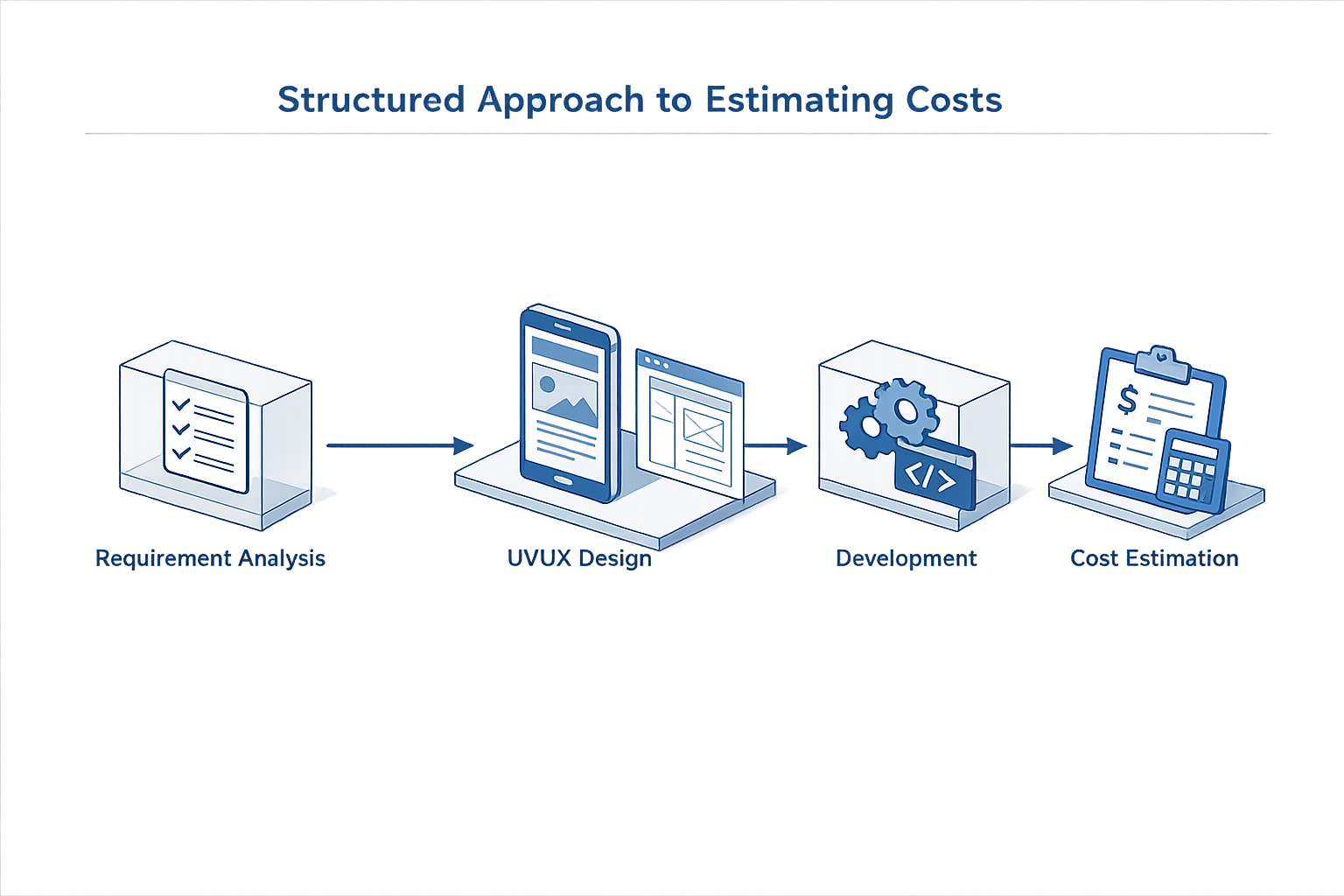
Estimating app costs in 2026 starts with breaking the problem into parts. You need a method that accounts for scope, tooling, and labor without inflating guesswork into gospel.
Step 1: Define Your Minimum Viable Product
Step 1
Define Your Minimum Viable Product
List the core features your app needs to solve one real problem. Strip out everything that feels like a nice-to-have. A focused MVP gives you a baseline cost estimate that won't spiral when reality hits.
Write down what the app must do on day one. If you can't explain it in three sentences, you're not done cutting.
Step 2: Choose Your Build Approach
Step 2
Choose Your Build Approach
Decide between traditional development, no-code platforms, or AI-assisted tools. Traditional agencies quote $50k–$500k+ for custom native apps. No-code platforms run $0–$500/month but lock you into their ecosystem. AI-assisted builders like Bolt or Replit Agent sit in the middle: fast iteration, lower upfront cost, code you own.
Bolt transforms ideas into working products without requiring coding experience. Replit Agent handles setup, writes code, and fixes problems as it goes. Both tools collapse the time from idea to prototype, which directly cuts labor costs.
For vibe-coding workflows, you describe what you want in plain language and the tool generates the code. This approach works when you need speed and can tolerate some iteration to get the details right. Tools like Lovable make it possible to ship production-ready apps in days rather than months.
Step 3: Estimate Platform and Feature Complexity
Step 3
Estimate Platform and Feature Complexity
Single-platform apps (iOS or Android only) cost 30–40% less than cross-platform builds. Add $10k–$30k for each complex feature: real-time data sync, payment processing, custom animations, or third-party API integrations. Backend infrastructure adds another $5k–$50k depending on scale.
| Feature Type | Cost Range | Notes |
|---|---|---|
| Static screens | $2k–$8k | Informational content, no user input |
| User authentication | $3k–$10k | Login, registration, password reset |
| Database integration | $5k–$20k | CRUD operations, data persistence |
| Payment processing | $8k–$25k | Stripe, PayPal, compliance overhead |
| Real-time features | $15k–$50k | Chat, live updates, WebSocket infrastructure |
Multiply feature costs by 1.5× if you're building for both iOS and Android natively. Cross-platform frameworks (React Native, Flutter) reduce that multiplier to 1.2×.
Step 4: Account for Design and Testing
Design work runs $5k–$40k depending on whether you need custom UI or can work from templates. Budget 20–30% of development cost for QA testing. Apps that skip this step ship with bugs that cost 3–5× more to fix post-launch.
Step 5: Add Ongoing Costs
Step 5
Add Ongoing Costs
Hosting, domain, and backend services run $20–$500/month. App store fees take 15–30% of revenue. Plan for $1k–$5k/month in maintenance once the app is live. These aren't optional — they're the price of staying online.
The total cost to build an app in 2026 depends on how many of these steps you can compress. AI tools and no-code platforms reduce labor hours. Traditional agencies give you more control but multiply the timeline and budget.
What Factors Drive App Development Costs Up or Down?
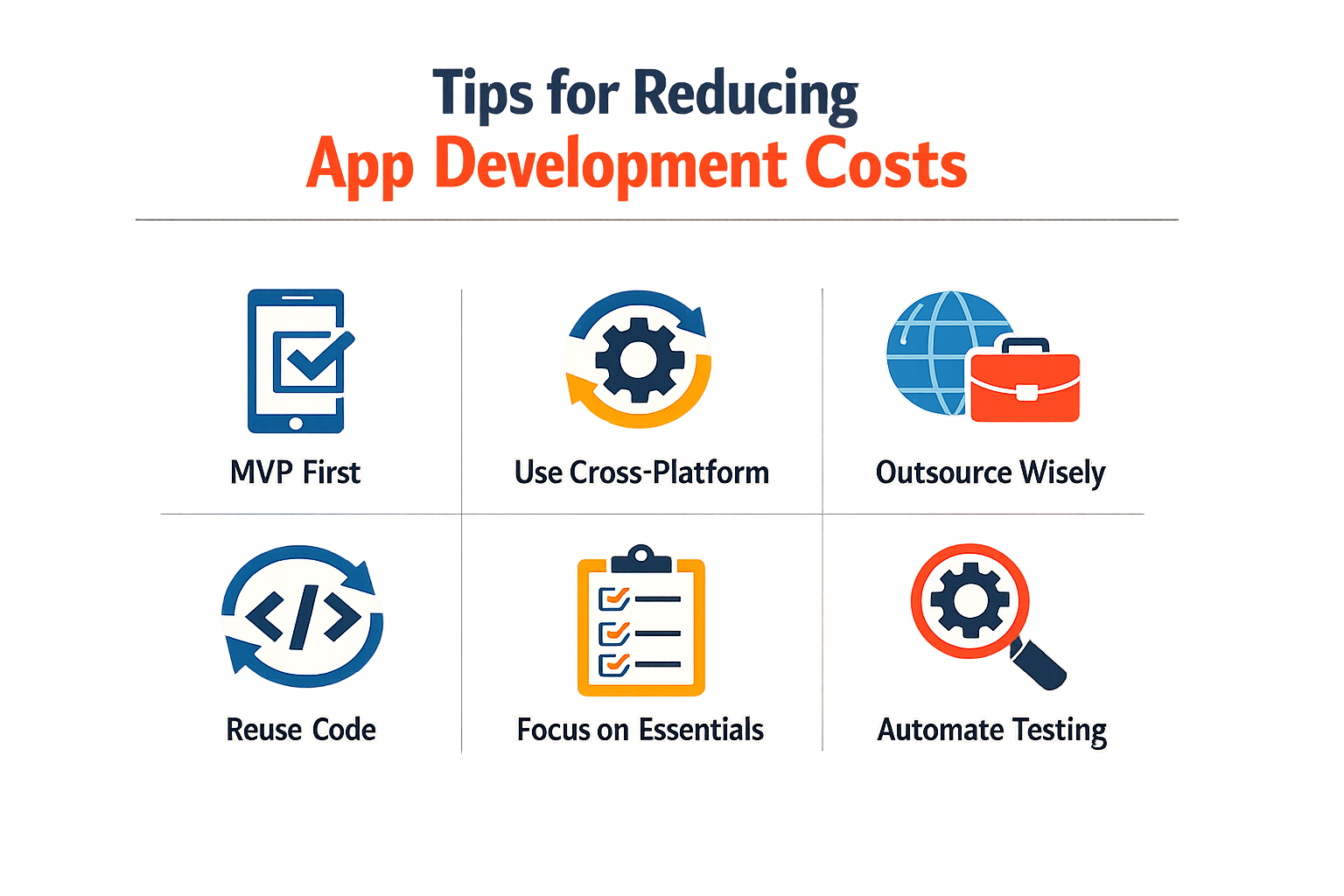
Cutting app development costs without sacrificing quality requires deliberate choices at every stage. The tools you pick, the features you prioritize, and the way you structure your workflow all directly impact your final bill. Here's what works.
Start with No-Code or Low-Code Platforms
No-code and low-code platforms eliminate the need for traditional development teams in many cases. Tools like Bolt, Replit Agent, and Lovable let you describe your idea in plain language and handle the technical implementation automatically. Bolt transforms ideas into working websites, web apps, and mobile apps without requiring coding knowledge. Replit Agent takes action beyond answering questions—it sets up projects, creates applications, checks its work, and fixes problems along the way. These platforms collapse weeks of traditional development into days or hours.
Use Credit-Based Platforms Strategically
Platforms like Lovable use credit systems that charge based on actual usage rather than flat monthly fees. Credits cover building your app, chatting with the AI, hosting, and running built-in backend features. Build credits apply to Plan mode and Build mode messages, while Cloud credits cover hosting resources like storage and network bandwidth. Understanding how credits are consumed helps you optimize costs—batch your changes, plan features before building, and avoid unnecessary iterations.
Prioritize Core Features First
Every feature adds cost. Start with the minimum viable feature set that solves your core problem. Additional capabilities like real-time updates, collaborative features, or advanced image processing can be added later once you've validated demand. This approach reduces initial build time and lets you allocate budget based on what users actually need rather than what you think they might want.
Step 1
Define your MVP scope
List every feature you think you need, then cut it in half. Your first version should do one thing well, not ten things poorly. Each feature you defer saves both development time and ongoing maintenance costs.
Step 2
Use platform-native features
Leverage built-in capabilities instead of building custom solutions. Most modern platforms include databases, authentication, hosting, and domains in one package. Using these native features eliminates the need for separate services and external accounts, which reduces both complexity and cost.
Own Your Code and Infrastructure
Platforms that let you own your code give you flexibility to move or modify your application later without vendor lock-in. Bolt Cloud, for example, provides databases, hosting, and domains while ensuring the code you create remains yours. This ownership matters when you need to scale, migrate to different infrastructure, or hand off the project to another developer. It also protects your investment if the platform changes pricing or features.
Choose the Right AI Agent for Your Task
Some platforms let you select which AI agent powers your builds based on the type of work you're doing. Different agents have different strengths—some excel at web apps, others at mobile apps or data-heavy applications. Matching the agent to your specific use case improves output quality and reduces the number of iterations needed to get working code. Fewer iterations mean lower credit consumption and faster delivery. For a detailed comparison of available tools, see Best Vibe Coding Tools in 2026 (Compared).
Batch Your Development Work
Frequent small changes consume more credits than batched updates. Plan your features, gather feedback, and implement changes in focused sessions rather than making continuous tweaks. This approach reduces the overhead of context switching and minimizes the number of build cycles you pay for.
The cheapest app is the one you finish—scope creep and endless iteration are budget killers.
Conclusion
App development costs in 2026 depend on three primary factors: complexity, platform choices, and the tooling you use. Simple apps with limited features and a single platform run cheaper than cross-platform products with custom backends and third-party integrations. The development approach—traditional agency, freelance team, or AI-assisted vibe coding—shifts the budget by an order of magnitude.
I've shipped apps both ways. Traditional paths give you predictable timelines and polished UX, but the invoice reflects every meeting and revision. Vibe coding tools compress the prototype-to-production cycle and cut labor costs, though they demand clearer upfront specs and more operator discipline to avoid rework.
Understanding cost drivers before you write the first line of code or sign the first contract keeps you from discovering halfway through that the feature list exceeds the budget. Treat cost estimation as part of product planning, not an afterthought. When the numbers align with the business model, you ship; when they don't, you cut scope or wait until they do.
Frequently asked questions
How much does a simple app cost to build in 2026?
A simple app with basic features costs between $500 and $10,000 using no-code or AI-assisted tools. Traditional development agencies charge $50,000–$100,000 for the same scope.
What is the cheapest way to build an app in 2026?
No-code platforms like Lovable, Bolt, or Replit Agent offer the lowest upfront costs, often under $500 for an MVP. You describe your app in plain language, and the platform generates working code.
How much does it cost to maintain an app after launch?
Maintenance costs run $1,000–$5,000 per month for hosting, bug fixes, OS updates, and minor feature additions. Apps with high traffic or complex backends cost more.
Does building for iOS and Android double the cost?
Building native apps for both platforms increases costs by 1.5–2×. Cross-platform frameworks like React Native or Flutter reduce that multiplier to 1.2×.
How long does it take to build an app in 2026?
AI-assisted tools can deliver an MVP in days to weeks. Traditional agency builds take 3–9 months depending on complexity. Timeline directly impacts labor costs.